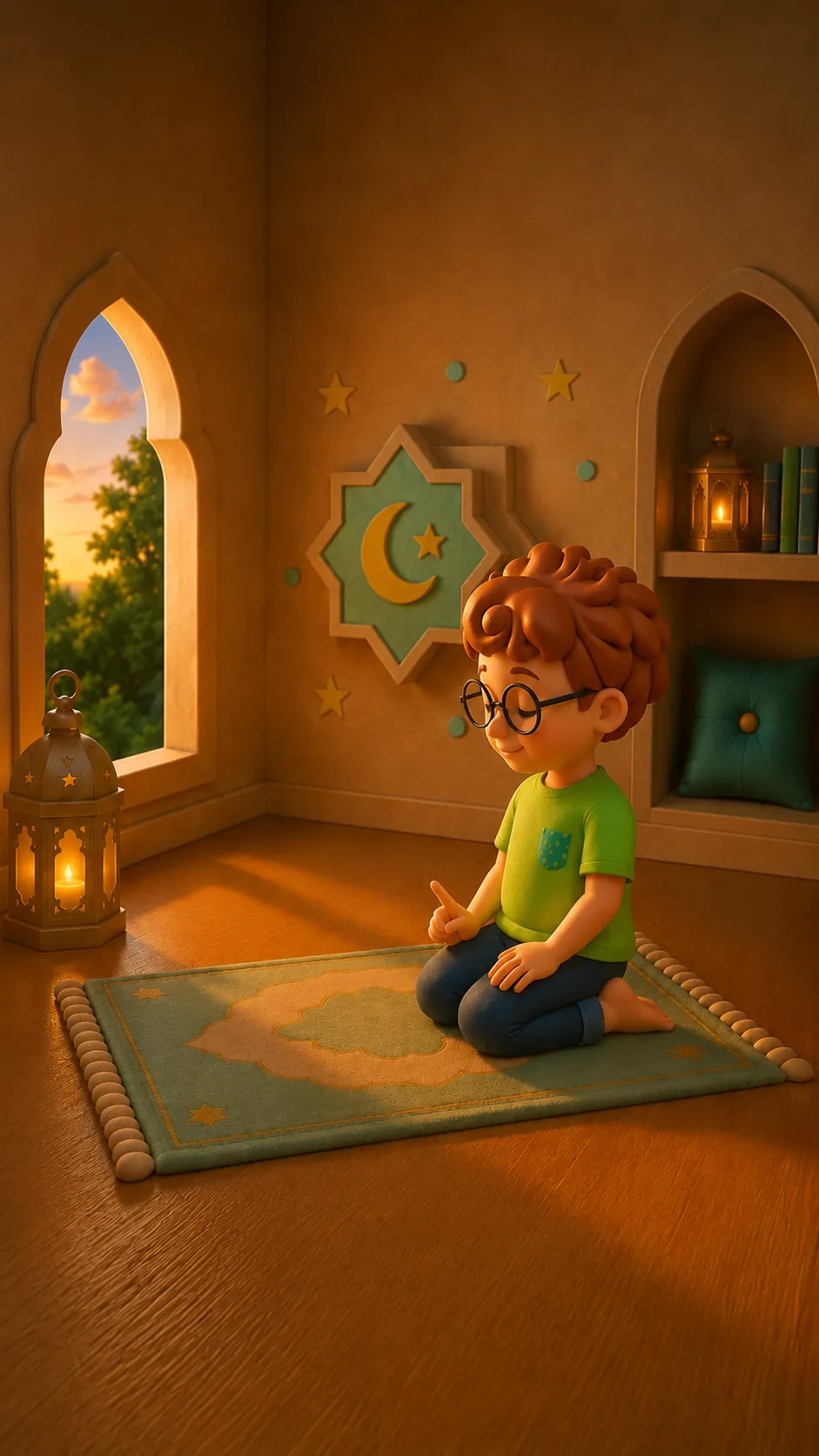
Welcome
Assalamu alaikum. Let's learn how to pray together. We'll learn one rakat, the universal building block of every Muslim prayer. Once you know one rakat, you can pray any of the five daily prayers: Fajr (2 rakat), Maghrib (3 rakat), and Dhuhr, Asr, and Isha (4 rakat each).
Step 1: Begin with Takbir
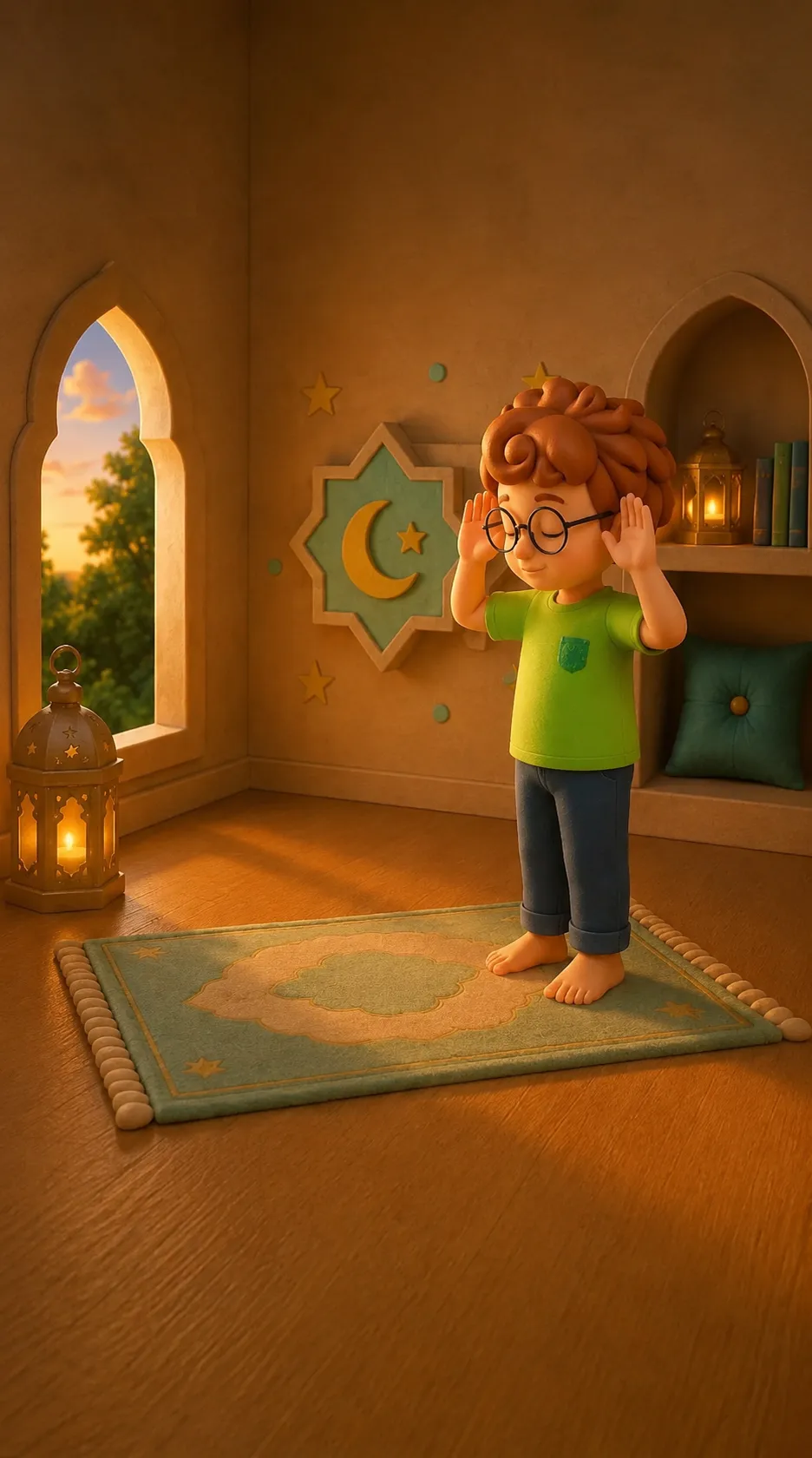
Stand facing the qiblah. Raise your hands to your ears and say:
اللهُ أَكْبَر
Allahu akbar: Allah is the greatest. This opens the prayer.
Step 2: Say the Opening Dua (Dua al-Istiftah)
After takbir, before Al-Fatiha, recite the opening dua. It is said once, at the very start of the prayer:
اللَّهُ أَكْبَرُ كَبِيرًا، وَالْحَمْدُ لِلَّهِ كَثِيرًا، وَسُبْحَانَ اللَّهِ بُكْرَةً وَأَصِيلًا
Allahu akbaru kabira, wal-hamdulillahi kathira, wa subhanallahi bukratan wa asila: Allah is the Greatest, abundantly. All praise is for Allah, abundantly. Glory be to Allah, morning and evening.
Step 3: Stand and Recite Al-Fatiha
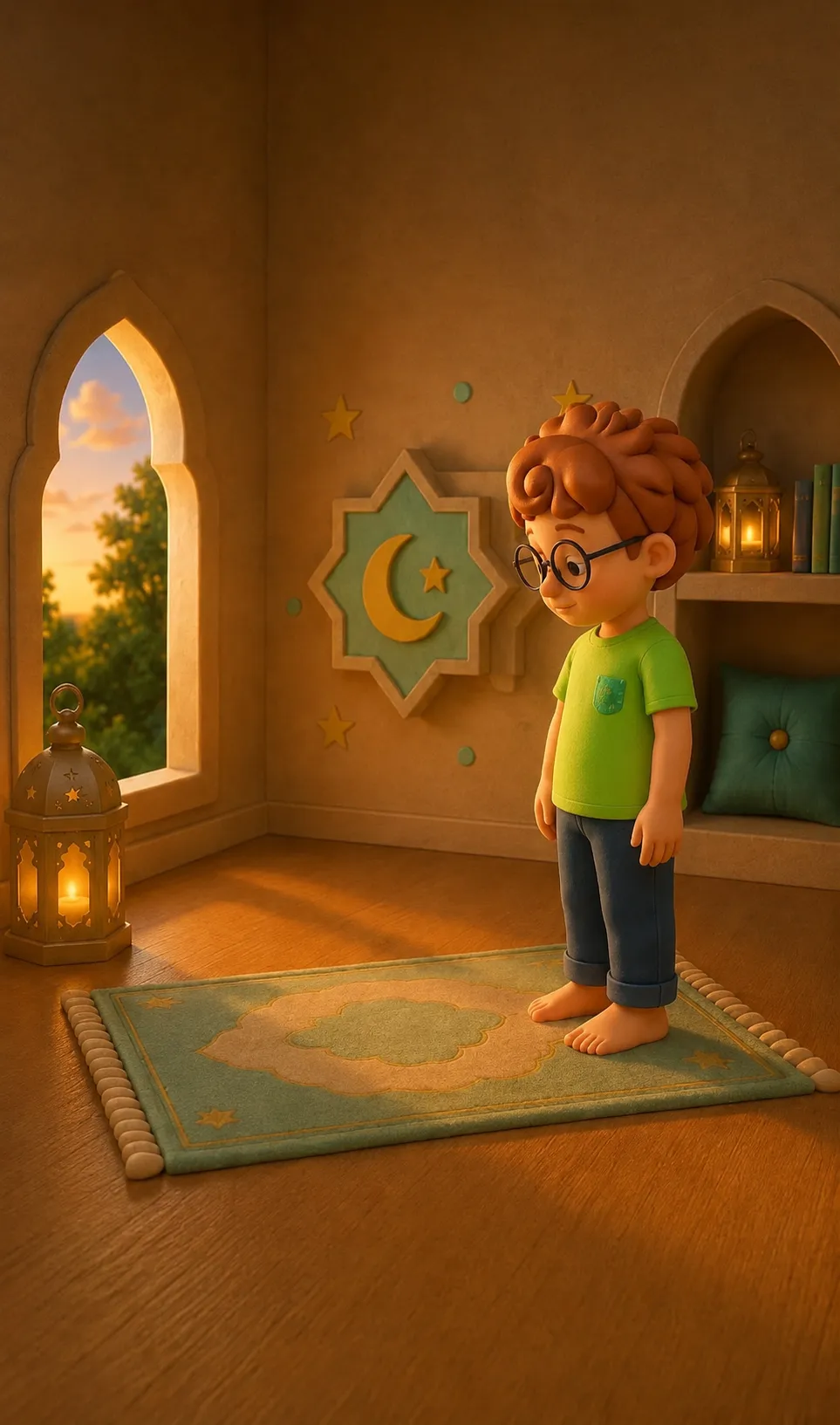
Place your right hand over your left hand below your navel. Recite Surah Al-Fatiha:
بِسْمِ اللَّهِ الرَّحْمَٰنِ الرَّحِيمِ. الْحَمْدُ لِلَّهِ رَبِّ الْعَالَمِينَ. الرَّحْمَٰنِ الرَّحِيمِ. مَالِكِ يَوْمِ الدِّينِ. إِيَّاكَ نَعْبُدُ وَإِيَّاكَ نَسْتَعِينُ. اهْدِنَا الصِّرَاطَ الْمُسْتَقِيمَ. صِرَاطَ الَّذِينَ أَنْعَمْتَ عَلَيْهِمْ غَيْرِ الْمَغْضُوبِ عَلَيْهِمْ وَلَا الضَّالِّينَ
Bismillahir-rahmanir-raheem. Alhamdu lillahi rabbil 'alameen. Ar-rahmanir-raheem. Maliki yawmid-deen. Iyyaka na'budu wa iyyaka nasta'een. Ihdinas-siratal-mustaqeem. Sirat alladheena an'amta alayhim, ghayril maghdubi alayhim wa lad-dalleen.
Meaning: In the name of Allah, the Most Gracious, the Most Merciful. All praise is for Allah, Lord of all worlds. The Most Gracious, the Most Merciful. Master of the Day of Judgment. You alone we worship, and You alone we ask for help. Guide us to the straight path. The path of those You have blessed, not of those who earned anger, nor of those who went astray.
Step 4: Recite a Short Surah (Al-Ikhlas)
After Al-Fatiha, recite a short surah you know. Surah Al-Ikhlas is short and beautiful:
قُلْ هُوَ اللَّهُ أَحَدٌ. اللَّهُ الصَّمَدُ. لَمْ يَلِدْ وَلَمْ يُولَدْ. وَلَمْ يَكُنْ لَهُ كُفُوًا أَحَدٌ
Qul huwallahu ahad. Allahus-samad. Lam yalid wa lam yulad. Wa lam yakun lahu kufuwan ahad.
Meaning: Say: He is Allah, the One. Allah, the Eternal Refuge. He does not give birth, nor was He born. And there is none equal to Him.
Step 5: Bow Down (Ruku)
Say Allahu akbar and bow forward. Hands on knees, back flat. Say three times:
سُبْحَانَ رَبِّيَ الْعَظِيمِ
Subhana rabbiyal adheem: Glory to my Lord, the Magnificent.
Step 6: Stand Back Up (I'tidal)
Rise from ruku, arms at sides. As you rise:
سَمِعَ اللَّهُ لِمَنْ حَمِدَهُ، رَبَّنَا وَلَكَ الْحَمْد
Sami Allahu liman hamidah, rabbana wa lakal hamd: Allah hears those who praise Him. Our Lord, all praise is for You.
Step 7: Prostrate (Sujud)
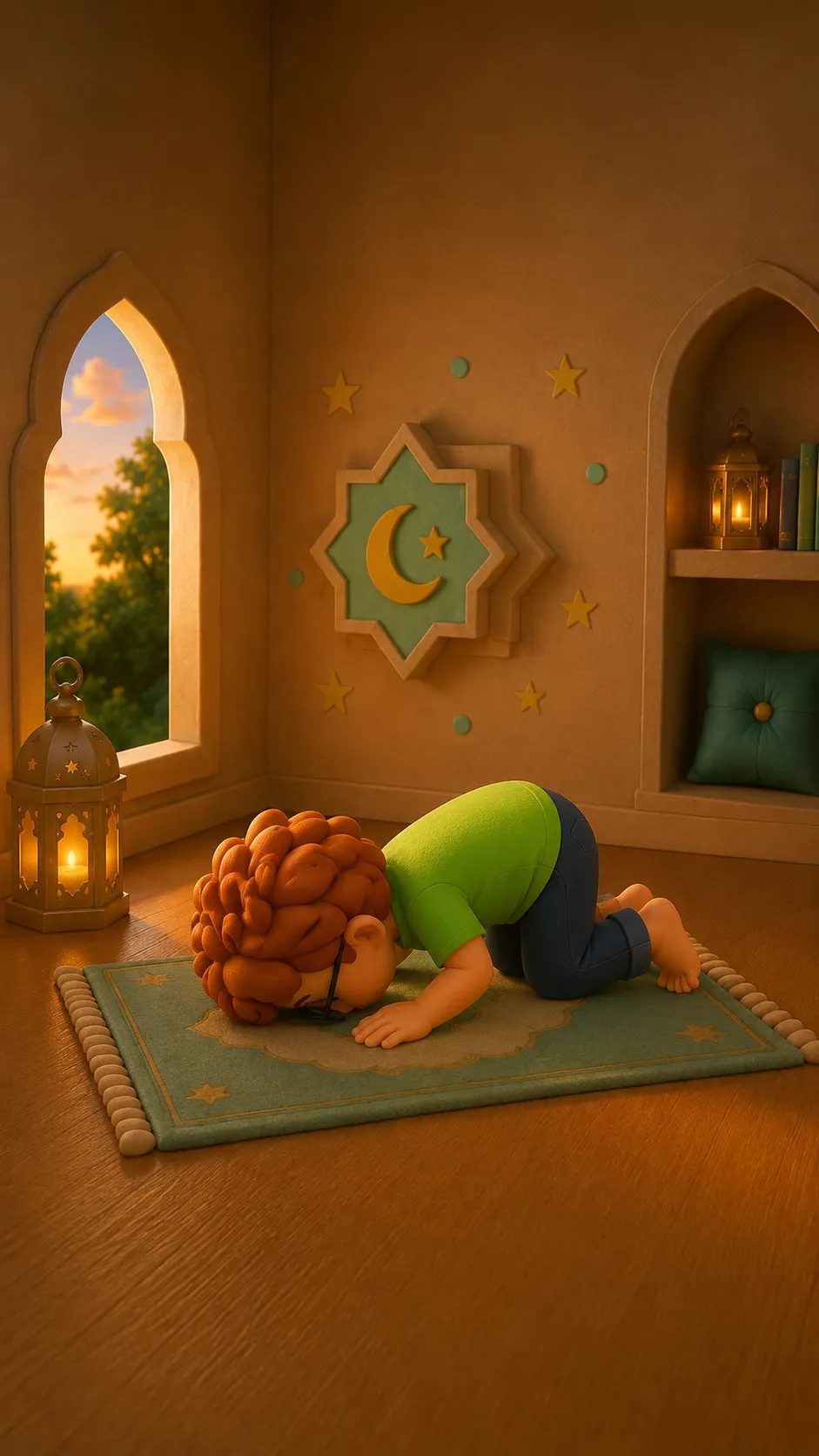
Say Allahu akbar and go down. Forehead and nose touch the mat. Seven points of contact: forehead+nose, both hands, both knees, both feet. Say three times:
سُبْحَانَ رَبِّيَ الأَعْلَى
Subhana rabbiyal a'la: Glory to my Lord, the Most High.
Step 8: Sit Briefly (Jalsa) and Prostrate Again
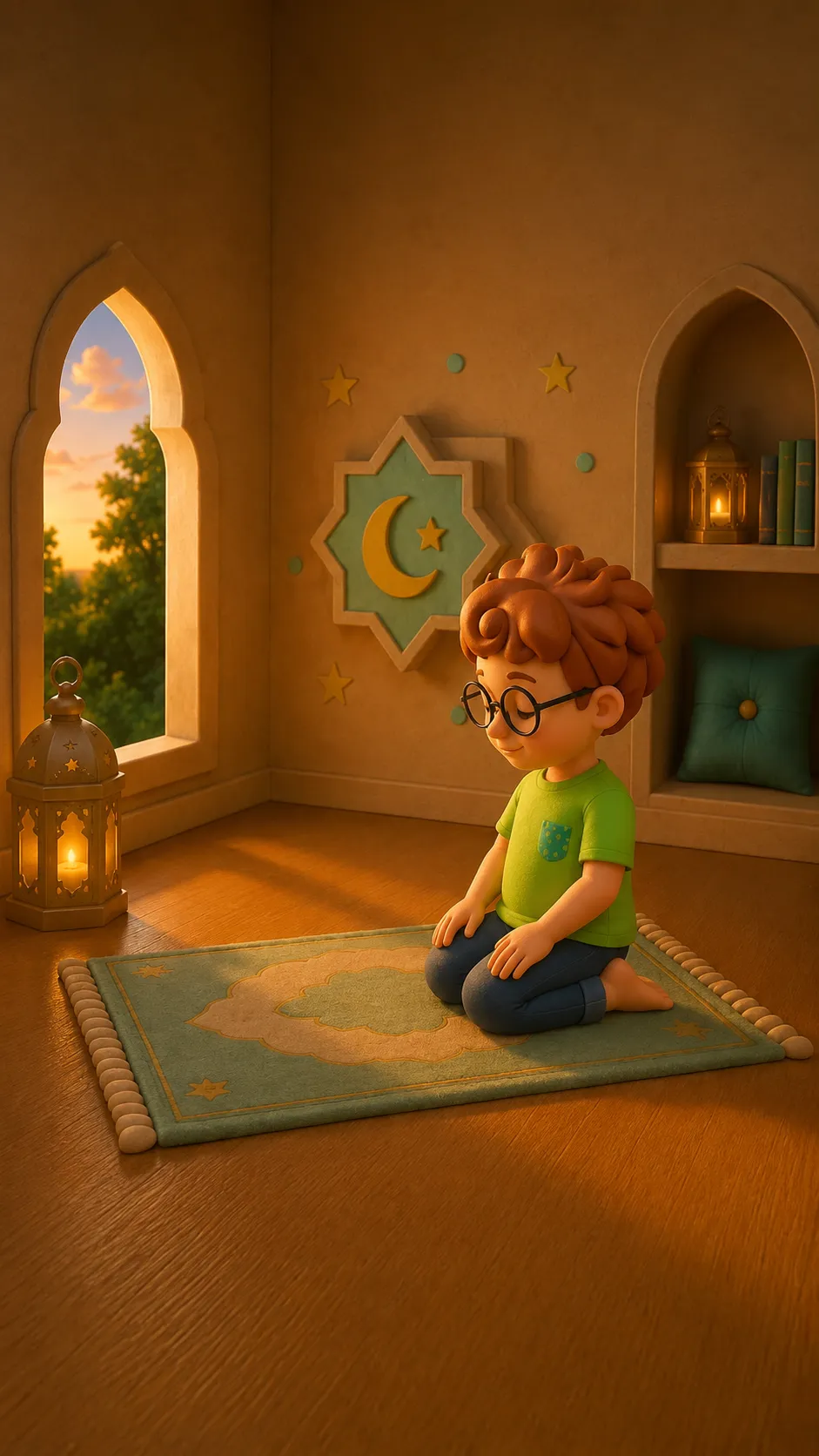
Sit up on your left foot, right foot upright on its toes. Pause briefly. Then return to sujud, the same as before, and say Subhana rabbiyal a'la three more times.
One Rakat is Complete
That is one rakat: standing, bowing, two prostrations with a sit between. For Fajr, do this twice. For Maghrib, three times. For Dhuhr, Asr, and Isha, four times.
Step 9: First Sitting (Tashahhud only)
After every second rakat, sit in the tashahhud position. Rest on your left foot with your right foot upright on its toes. Recite the tashahhud:
التَّحِيَّاتُ لِلَّهِ، وَالصَّلَوَاتُ، وَالطَّيِّبَاتُ، السَّلَامُ عَلَيْكَ أَيُّهَا النَّبِيُّ وَرَحْمَةُ اللَّهِ وَبَرَكَاتُهُ، السَّلَامُ عَلَيْنَا وَعَلَىٰ عِبَادِ اللَّهِ الصَّالِحِينَ، أَشْهَدُ أَنْ لَا إِلَٰهَ إِلَّا اللَّهُ، وَأَشْهَدُ أَنَّ مُحَمَّدًا عَبْدُهُ وَرَسُولُهُ
Raise your right index finger at 'ash-hadu an la ilaha illallah.' If the prayer has more rakats to go, stand back up and continue. If this is your final rakat, stay seated for the next step.
Step 10: Final Sitting (Tashahhud + Durood al-Ibrahimi)
In the final rakat, sit the same way and recite the tashahhud again, exactly as before. Then add the Durood to send peace and blessings upon the Prophet Muhammad. The Durood is only recited in this final sitting:
اللَّهُمَّ صَلِّ عَلَىٰ مُحَمَّدٍ وَعَلَىٰ آلِ مُحَمَّدٍ ❁ كَمَا صَلَّيْتَ عَلَىٰ إِبْرَاهِيمَ وَعَلَىٰ آلِ إِبْرَاهِيمَ ❁ وَبَارِكْ عَلَىٰ مُحَمَّدٍ وَعَلَىٰ آلِ مُحَمَّدٍ ❁ كَمَا بَارَكْتَ عَلَىٰ إِبْرَاهِيمَ وَعَلَىٰ آلِ إِبْرَاهِيمَ فِي الْعَالَمِينَ ❁ إِنَّكَ حَمِيدٌ مَجِيدٌ ❁
Step 11: End with Salaam
Turn your head to the right and say:
السَّلَامُ عَلَيْكُمْ وَرَحْمَةُ اللَّهِ
Assalamu alaikum wa rahmatullah: Peace be upon you and Allah's mercy. Then turn your head to the left and say it again. Your prayer is complete.
Completion
You have learned the universal foundation of Muslim prayer. May Allah accept your salah and bless your effort.