What is dhikr for Muslim kids? Dhikr means remembering Allah throughout the day with our hearts and words. Here are simple, beautiful dhikr for kids to learn, including the special Eid Takbir, the daily phrases of praise, and morning and evening remembrance. Looking for short prayers too? Visit our daily duas for kids.
Common questions about dhikr and how to teach the remembrance of Allah to your child.
Dhikr means remembering Allah throughout the day with our hearts and words. For Muslim kids, dhikr starts with simple, beautiful phrases like SubhanAllah (Glory be to Allah), Alhamdulillah (all praise is for Allah), and Allahu Akbar (Allah is the Greatest).
Children also learn the Eid Takbir for celebrations and short morning and evening adhkar to begin and end the day. Dhikr is remembering Allah, which is different from a dua, a personal prayer asking Allah for something.
The four most beloved phrases of remembrance are the best place to start: SubhanAllah (Glory be to Allah), Alhamdulillah (all praise is for Allah), Allahu Akbar (Allah is the Greatest), and La ilaha illa Allah (there is no god but Allah).
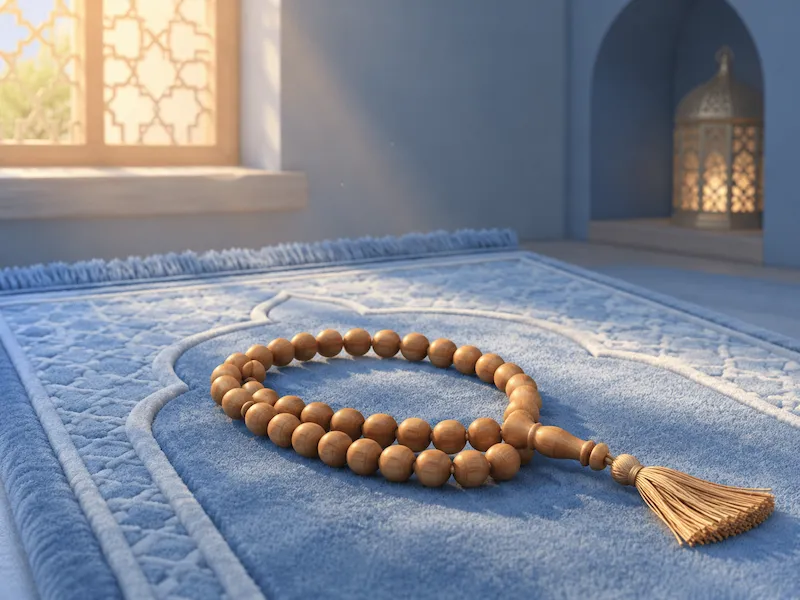
They are short, easy to say, and can be repeated any time. Many Muslims also count them on their fingers or on prayer beads after salah.
Dhikr can be made at any time, in any place, with no special preparation. Muslims often say dhikr in the morning and evening, after each of the five daily prayers, and in quiet moments throughout the day.
For children, tying dhikr to everyday moments like waking up or finishing a meal helps it become a natural habit.
Dhikr gives children a simple, joyful way to stay connected to Allah all day long. The phrases are short enough for very young children, build Arabic familiarity early, and offer comfort in big feelings.
Starting young means remembrance of Allah becomes a natural part of who your child is, rather than something learned later.
Yes. The phrases of remembrance and the morning and evening adhkar on our site come from the Quran and the authentic teachings of the Prophet Muhammad ﷺ, preserved in classical hadith collections such as Bukhari and Muslim.
We use simple kid-friendly English for the meanings, while the Arabic itself is the original wording transmitted in Islamic tradition.
Tie each dhikr to a moment your child already lives through every day. Say SubhanAllah together when you see something beautiful, Alhamdulillah after eating, and the morning adhkar on the way to school.
Repeat it together a few times, keep it light and joyful, and let the audio help with pronunciation. Rhythm and repetition work far better than memorization drills.