← Back to Lessons
Stories of the Companions

Khadijah's Gift to Her Husband

He came home shaking and afraid. She wrapped him in a blanket and gave him something worth more than gold: she believed him.

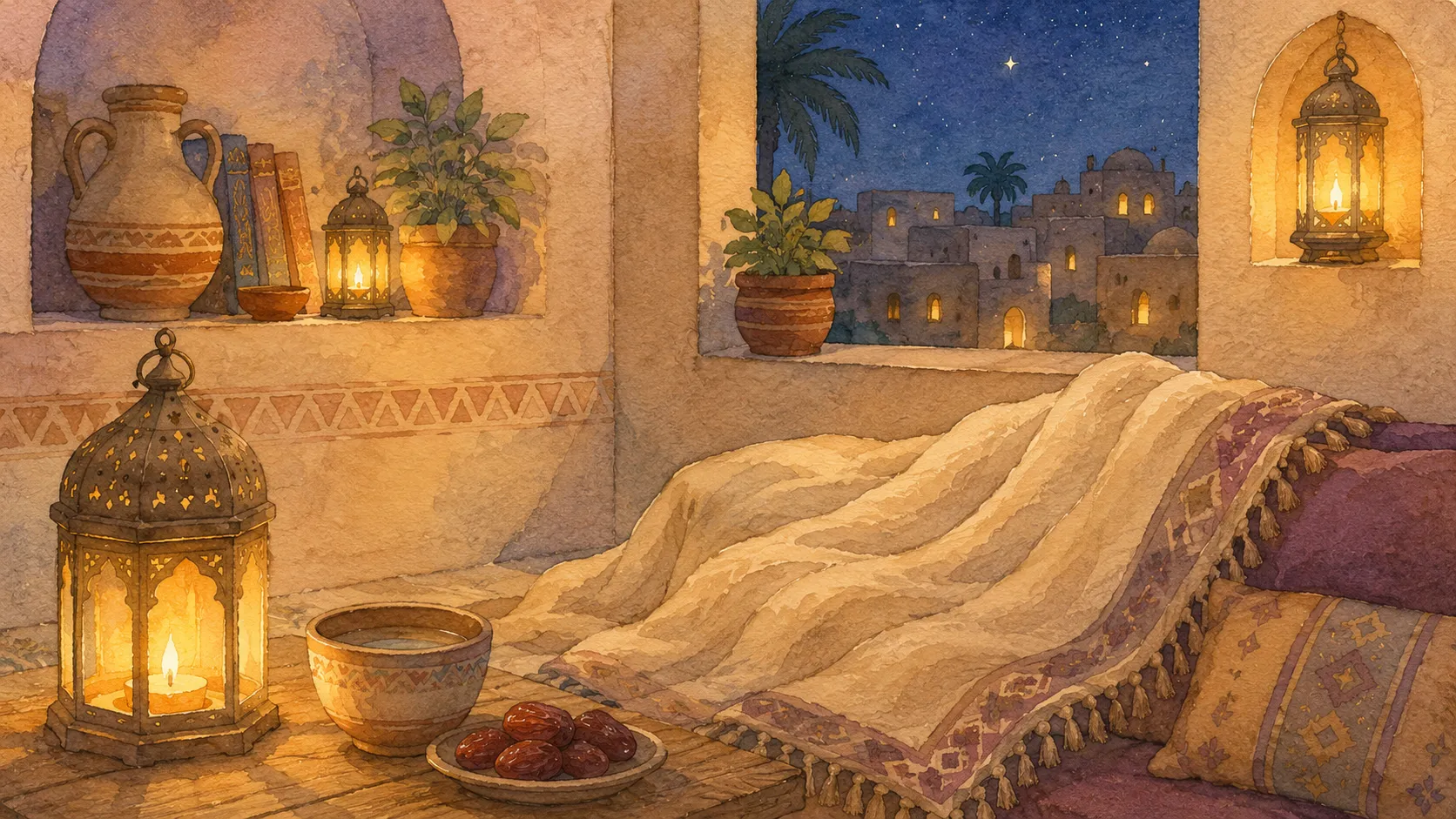
A warm lamplit room in Mecca at night with a soft blanket spread on a low bed, a bowl of water and a plate of dates, and the sleeping city visible through the window
Listen
0:00

This story begins where another one ends. The Prophet ﷺ had just come down from the cave of Hira, where the angel Jibreel had appeared to him. He was shaking. His heart was pounding. He had never been so frightened in his life.

He did not go to a king. He did not go to a wise man. He went home.

Home was Khadijah (may Allah be pleased with her). She was his wife, and she was remarkable — a successful businesswoman, respected by everyone in Mecca, older than him and wiser than most. Years before, she had been so impressed by how honest he was that she had asked to marry him.

He came through the door and said, "Cover me! Cover me!"

So she covered him. She took a blanket and wrapped it around him and let him lie down, and she did not ask him a single question until the shaking stopped. That was her first gift: she made him safe.

When he was calm enough, he told her everything, and then he said the thing he was most afraid of: "I fear that something may happen to me."

And this is where Khadijah said the words Muslims have loved ever since:

"No, by Allah! Allah will never disgrace you."

Then she told him why she was so certain — and listen to her reasons, because they are all about how he treated people:

"You keep good relations with your family. You help those who are in need. You are generous to your guests. You stand by people when trouble comes."

She was saying: Allah does not abandon someone who lives like you do. She did not have proof. She had something better — she knew him.

Then she did one more wise thing. She took him to her old cousin Waraqah, a man who had read the earlier scriptures. And when Waraqah heard the story he said: this is the same angel Allah sent to Musa. You are the prophet of this nation.

Khadijah was the first person in the whole world to believe in the Prophet ﷺ. Not the first man, not the first woman — the first person. Before anyone else on earth said it, she said it. And she never stopped standing beside him for as long as she lived.

What this story teaches us

Khadijah's gift did not cost money, and she was one of the richest people in Mecca. Her gift was that when the person she loved was frightened, she made him feel safe, she reminded him of the good in him, and she believed him. Think of how she comforted him: she listed the kind things he did for other people. When someone you love is scared or sad, you can give them exactly the same gift — and you do not need to be rich or grown up to do it.

From The hadith of the first revelation in Sahih Bukhari, which records Khadijah's words to the Prophet ﷺ.

Try it today

Today, give Khadijah's gift to someone. When a person in your house is upset, do not rush to fix it or argue. Sit with them, make them feel safe, and remind them of one good thing you know is true about them.

Read more lessons

For Parents

Source, context, and how to share this story with your child.

Who was Khadijah (may Allah be pleased with her)?

Khadijah bint Khuwaylid was the Prophet's ﷺ first wife and the first person ever to accept Islam. She was a successful and highly respected merchant in Mecca who ran her own trading business, and she was about fifteen years older than the Prophet ﷺ. She first noticed him because of his honesty when he traded on her behalf, and it was she who proposed marriage. They were married for around twenty-five years, and he did not marry anyone else while she was alive.

What did Khadijah actually say to him?

Sahih Bukhari records her words closely. When the Prophet ﷺ told her what had happened and said he feared for himself, she replied: "No, by Allah! Allah will never disgrace you." She then gave her reasons — that he kept ties of kinship, helped the needy, was generous to his guests, and stood by people in times of hardship. It is a striking answer: her evidence that Allah would protect him was simply the way he treated other people.

Why is she called the first believer?

Because she was, without qualification. When the Prophet ﷺ received the first revelation, Khadijah believed him immediately — before any man, woman, or child on earth. Muslims often note the order in which Islam first spread: Khadijah his wife, Ali the child in his household, Zayd whom he had freed, and Abu Bakr his friend. The very first people to believe were the ones who knew him best at home, which says a great deal about his character.

Who was Waraqah ibn Nawfal?

Waraqah was Khadijah's elderly cousin, a man who had studied the earlier scriptures and had become a Christian in a time when most of Mecca worshipped idols. Khadijah took the Prophet ﷺ to him for counsel. When Waraqah heard the account he recognised it at once and said that the one who came was the same angel Allah had sent to Musa (Moses), and that Muhammad ﷺ was the prophet of this nation. He also warned him that his people would drive him out — and offered to support him, though he died shortly afterward.

Is this story in the Quran or in hadith?

It comes from hadith rather than the Quran — specifically the long and well-known narration of the beginning of revelation in Sahih Bukhari, which is one of the most authenticated reports in the entire seerah. The Quran refers to the Prophet ﷺ being wrapped in his cloak in the opening of Surah Al-Muzzammil ("O you who is wrapped up") and Surah Al-Muddaththir, which many scholars connect to the moments after Hira.

How can I teach this story to my child?

It is one of the best stories in the seerah for teaching emotional kindness, so keep it there. Point out that the Prophet ﷺ — the strongest example we have — was frightened, and that being frightened is not shameful. Then point out what Khadijah did: she covered him first and talked second. Ask your child, "What could you do if your brother or your friend was really scared?" It also quietly shows children a marriage built on trust and support, which is worth them seeing.