← Back to Lessons
Stories of the Prophet ﷺ

The Boy at the Table

How the Prophet ﷺ gently taught a hungry young boy three little manners we still use at every meal.

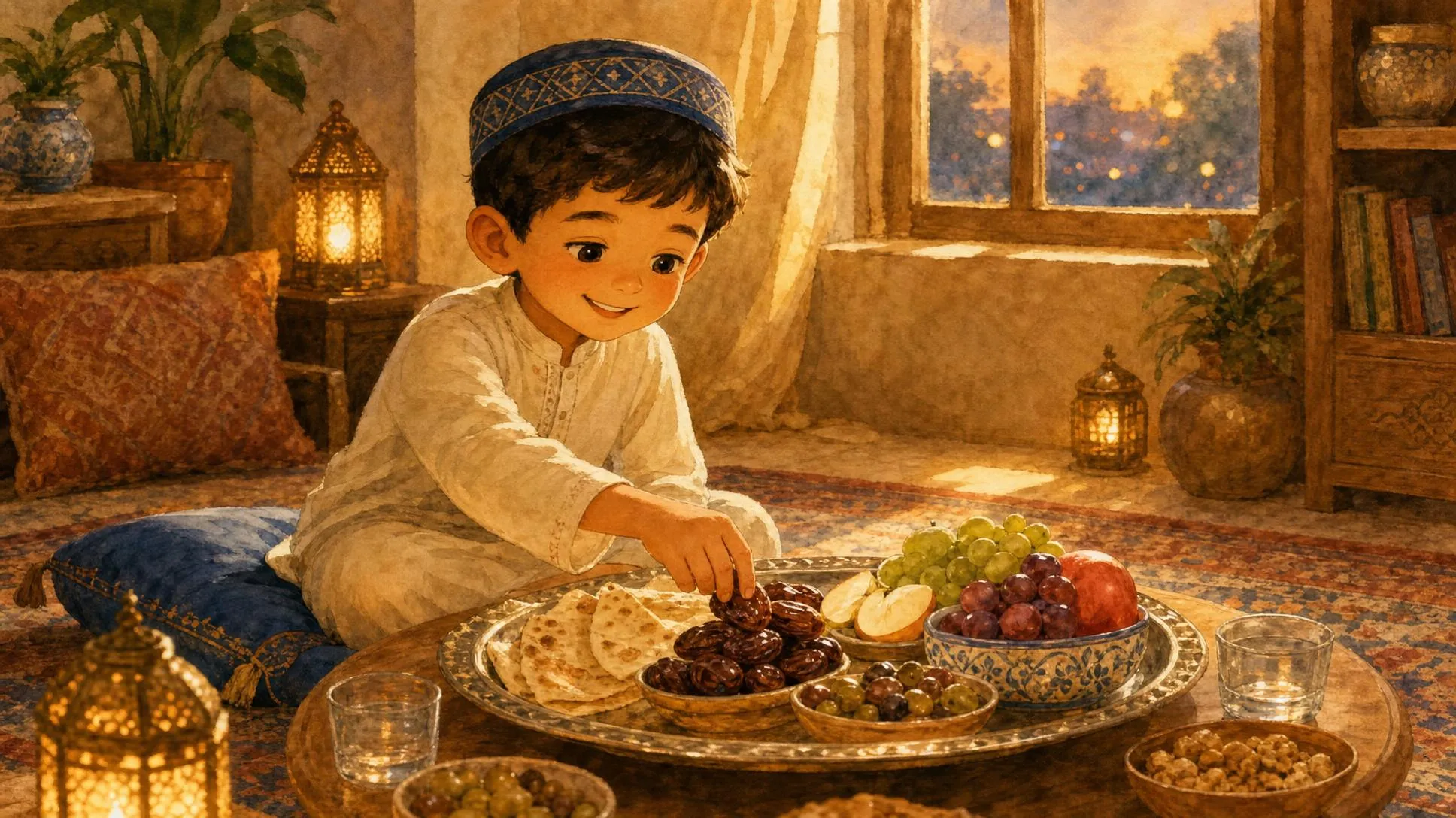
Young Umar ibn Abi Salama sitting to eat from a shared dish beside the Prophet Muhammad, who gently teaches him the manners of eating
Listen
0:00

When the Prophet Muhammad ﷺ was alive, there was a young boy named Umar ibn Abi Salama. He lived in the Prophet's home and was cared for by him, like part of the family.

One day, they all sat down to eat together. The food was placed in one big dish in the middle, the way people often ate long ago, with everyone sharing from the same plate.

Little Umar was hungry and excited. His hand darted here and there all across the dish, reaching for the tastiest-looking pieces from every side.

The Prophet ﷺ noticed. But he did not get angry, and he did not make the boy feel bad. Gently and kindly, like a loving teacher, he taught Umar three simple things.

"O young boy," he said, "say Bismillah." That means: begin by saying "In the name of Allah."

"Eat with your right hand," he said next.

"And eat from what is in front of you," he finished, meaning take from the part of the dish that is closest to you, instead of reaching across to everyone else's side.

Umar never forgot those three little rules. He remembered them for the rest of his life and taught them to others. And now, more than a thousand years later, Muslim children all around the world still learn them, maybe even at your table tonight.

What this story teaches us

The Prophet ﷺ taught even a small child with gentleness, not harshness. And he showed that good manners begin with Allah: we say Bismillah first, use our right hand, and think of others by taking what is near us. Small manners can bring big rewards.

From a hadith narrated by Umar ibn Abi Salama (may Allah be pleased with him), recorded in Sahih al-Bukhari and Sahih Muslim (mutafaq alayh, agreed upon by both collections).

Try it today

At your very next meal, try all three of the Prophet's ﷺ manners: say "Bismillah" before your first bite, eat with your right hand, and take food from the part of the plate closest to you. Three little sunnahs in one meal!

Read more lessons

For Parents

Source, context, and how to share this story with your child.

What did the Prophet ﷺ teach the boy at the table?

A young boy named Umar ibn Abi Salama was eating from a shared dish and his hand was moving all over it. The Prophet ﷺ gently taught him three simple manners of eating: "Say Bismillah (mention the name of Allah), eat with your right hand, and eat from what is near you."

These three little rules became one of the most famous teachings on manners in Islam, and Muslim children still learn them today.

Who was Umar ibn Abi Salama?

Umar ibn Abi Salama (may Allah be pleased with him) was a young boy who grew up in the household of the Prophet Muhammad ﷺ. He was the son of Umm Salama, one of the wives of the Prophet, so he was raised under the Prophet's care.

It was at a meal, when Umar was still a child, that the Prophet ﷺ taught him the three manners of eating in a gentle and loving way.

What are the Islamic manners of eating?

The core manners of eating in Islam come straight from this hadith and others: say Bismillah before you begin, eat with your right hand, and eat from the food closest to you rather than reaching across the dish.

Muslims also try to eat while sitting, take modest amounts without waste, and say "Alhamdulillah" (all praise is for Allah) when they finish. These simple habits turn every meal into a moment of gratitude and good manners.

Why do Muslims eat with the right hand?

The Prophet Muhammad ﷺ taught Muslims to use the right hand for eating and drinking and for other good and clean actions. It is a sunnah, a practice of the Prophet that Muslims follow out of love for him.

Teaching children to eat with the right hand from a young age is one of the simplest and earliest sunnahs a family can practice together at the table.

Where is this hadith recorded?

The hadith is recorded in both Sahih al-Bukhari and Sahih Muslim, the two most authentic hadith collections in Sunni Islam, and is narrated by Umar ibn Abi Salama himself (may Allah be pleased with him).

Because it is found in both Bukhari and Muslim, it carries the highest level of authenticity in Islamic tradition (mutafaq alayh, agreed upon by both collections).

How can I use this story with my child?

This story is perfect for the dinner table. Notice that the Prophet ﷺ did not scold or shame the boy, he taught him gently, which is a beautiful model for parents.

Turn the three manners into a family habit: pause to say "Bismillah" before the first bite, use the right hand, and take food from the part of the plate closest to you. Praise your child when they remember, just as the Prophet taught with encouragement. Over time these small sunnahs become second nature.