← Back to Lessons
Duas and Where They Come From

The Dua Before Sleep

A small dua the Prophet ﷺ taught us to say at bedtime, so we sleep in Allah's care.

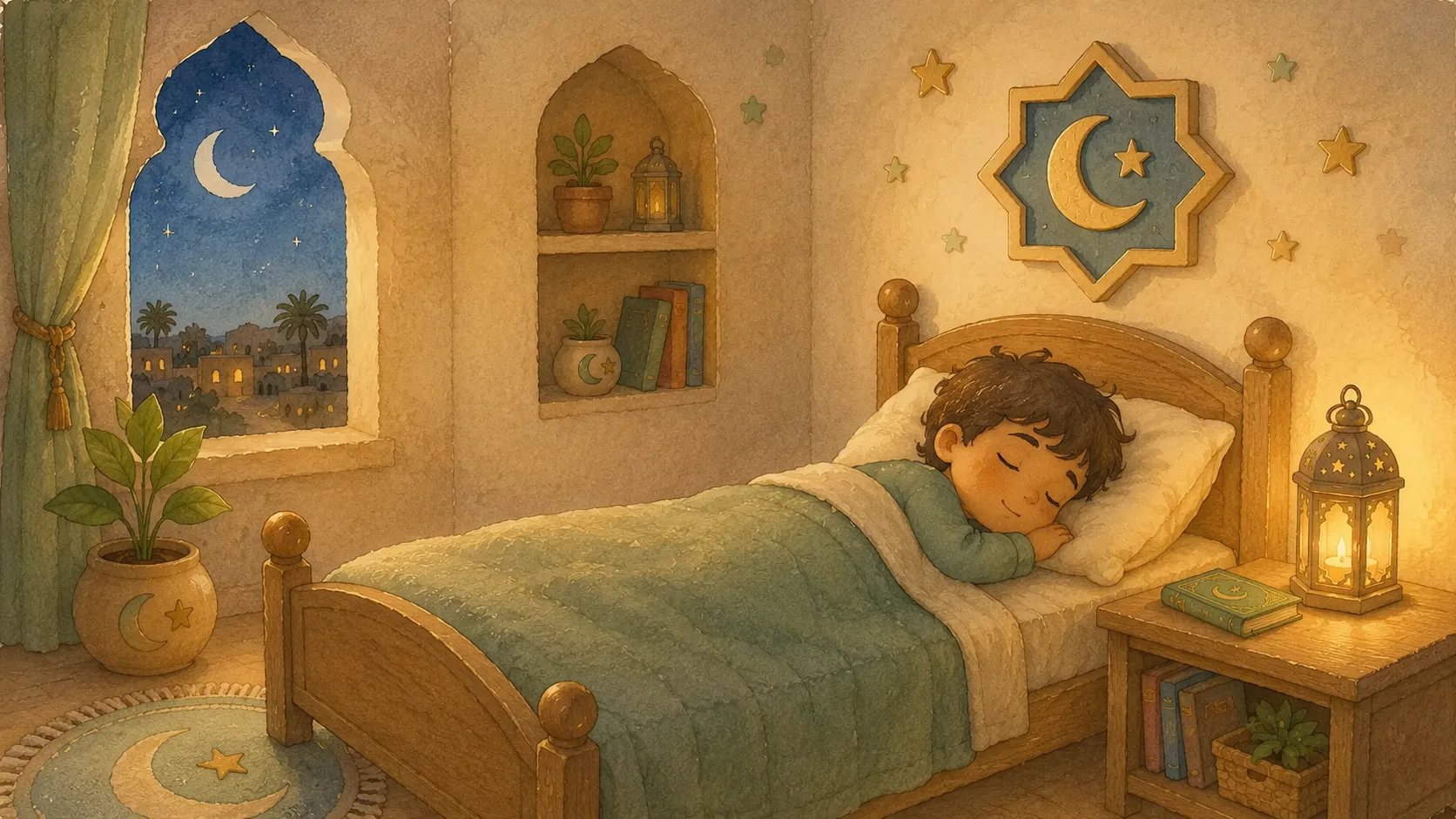
A child sleeping peacefully under a soft blanket beside a glowing lantern, illustrating the Islamic bedtime dua
Listen
0:00

When the Prophet Muhammad ﷺ was teaching his companions how to live, he did not only teach them what to do in the daytime. He also taught them what to do at night, when the day was ending and it was time to sleep.

The Prophet ﷺ taught that sleep is something very special. When we close our eyes and drift off, our soul rests in اللَّه's care until morning.

Some companions asked the Prophet ﷺ what they should say right before going to sleep. He taught them a beautiful short dua to say with their eyes closed, just as they were lying down. The dua is:

بِاسْمِكَ اللَّهُمَّ أَمُوتُ وَأَحْيَا

Bismika Allahumma amootu wa ahya.

It means: "In Your name, O Allah, I die and I live."

The words "die" and "live" might sound strange for a sleep dua. But the Prophet ﷺ taught us that sleeping is like a small, gentle kind of dying, because we lose track of the world around us. And waking up in the morning is like being given life again, because اللَّه gives our day back to us.

So when we say this dua at night, we are telling اللَّه: "I am giving my night to You. Take care of me while I sleep. And if You give me another morning, I will live it for You."

The Prophet ﷺ also taught us a dua to say in the morning, right when we wake up:

الْحَمْدُ لِلَّهِ الَّذِي أَحْيَانَا بَعْدَ مَا أَمَاتَنَا وَإِلَيْهِ النُّشُورُ

Alhamdulillahil-lathee ahyana ba'da ma amatana wa ilayhin-nushoor.

It means: "All praise is for Allah, who gave us life after taking it from us, and to Him we will return."

These two duas are like a pair. One puts us into اللَّه's care at night. One thanks اللَّه for giving us a new morning. Together, they teach us that every night and every morning are gifts from اللَّه.

What this story teaches us

Sleep is a gift from Allah. The Prophet ﷺ taught us that when we sleep, we are placing ourselves in Allah's care. The little dua we say before sleeping is small enough for any kid to learn, and it turns every bedtime into a moment of connection with Allah.

Both duas are recorded in Sahih al-Bukhari. The sleep dua is narrated by Hudhayfah ibn al-Yaman (may Allah be pleased with him); the morning dua by Abu Hurairah (may Allah be pleased with him). The Prophet ﷺ said these every night and every morning of his life.

Try it today

Tonight, when you get into bed, try saying this little dua. You don't need to be perfect with the Arabic. The English meaning works too. Allah hears every kid who calls on Him at bedtime.

Read more lessons

For Parents

Source, context, and how to share this story with your child.

What is the dua to say before sleeping in Islam?

The dua the Prophet Muhammad ﷺ taught his companions to say right before sleeping is "Bismika Allahumma amootu wa ahya" (بِاسْمِكَ اللَّهُمَّ أَمُوتُ وَأَحْيَا), which means "In Your name, O Allah, I die and I live." The dua is short, easy to memorize, and traditionally said with eyes closed as you are lying down. It places the night under Allah's care and acknowledges that sleep itself is a small surrender of consciousness, a daily reminder of the larger journey we are on.

What is the morning dua after waking up?

The morning dua, which forms the natural pair with the sleep dua, is "Alhamdulillahil-ladhi ahyana ba‘da ma amatana wa ilayhi an-nushoor," meaning "All praise is for Allah who gave us life after taking it from us, and to Him we will return." Together with the sleep dua, these two short prayers form a complete bedtime-to-morning routine that the Prophet Muhammad ﷺ taught his companions. One puts us into Allah's care at night; one thanks Allah for waking us up. Children who learn both early begin and end every day with a moment of gratitude.

Why does Islam describe sleep as a small death?

The Quran and hadith both describe sleep as a temporary surrender of the soul, similar to but lighter than death. The Quran says in Surah Az-Zumar (39:42) that Allah takes the souls at the time of death, and also takes the souls of those who do not die during their sleep. The Prophet Muhammad ﷺ built on this when he taught the sleep dua: by saying "I die and I live," we acknowledge that going to sleep is a kind of small dying, and waking is a kind of small resurrection. The teaching is not meant to be scary. Instead, it is meant to make every morning feel like a gift and every night feel like a peaceful trust placed in Allah's care.

What is the source of these two duas?

Both duas are recorded in Sahih al-Bukhari, the most authentic hadith collection in Sunni Islam. The sleep dua is narrated through Hudhayfah ibn al-Yaman (may Allah be pleased with him), one of the Prophet's closest companions and a trusted keeper of the Prophet's private teachings. The morning dua is narrated through Abu Hurairah (may Allah be pleased with him), one of the most prolific narrators of hadith in Islam. The Prophet Muhammad ﷺ is reported to have said both duas every night and every morning of his life, and he taught them to his companions to do the same.

Is the "sleep is a small death" idea scary for kids?

For most children, no. The idea is presented gently in this lesson, and most kids find the metaphor more interesting than scary, similar to how they might think of a phone "going to sleep" and "waking up." If your child is especially sensitive or asks anxious questions about death, you can de-emphasize that part of the dua's meaning and focus instead on the comforting half: Allah is taking care of us while we sleep, and Allah will give us a new morning when we wake up. The dua is ultimately about safety and trust, not fear. Some parents wait until their child is a little older before exploring the "small death" metaphor in detail.

How can I use this lesson with my child?

This lesson is best taught as a real bedtime ritual rather than just a story to read. After your child reads or hears it once, start saying the sleep dua together every night, right as they close their eyes. Within a week, they will start saying it on their own. Add the morning dua the same way: say it together the moment they open their eyes. You can also ask: "Why do you think the Prophet taught us a dua for both night and morning?" or "How does it feel to know Allah is taking care of you while you sleep?" The lesson works best when the duas become muscle memory, said softly, every day, year after year.