← Back to Lessons
Stories of the Prophet ﷺ

The Camel Who Came in Tears

A story about a tired camel, a thoughtful young man, and a gentle lesson from the Prophet ﷺ.

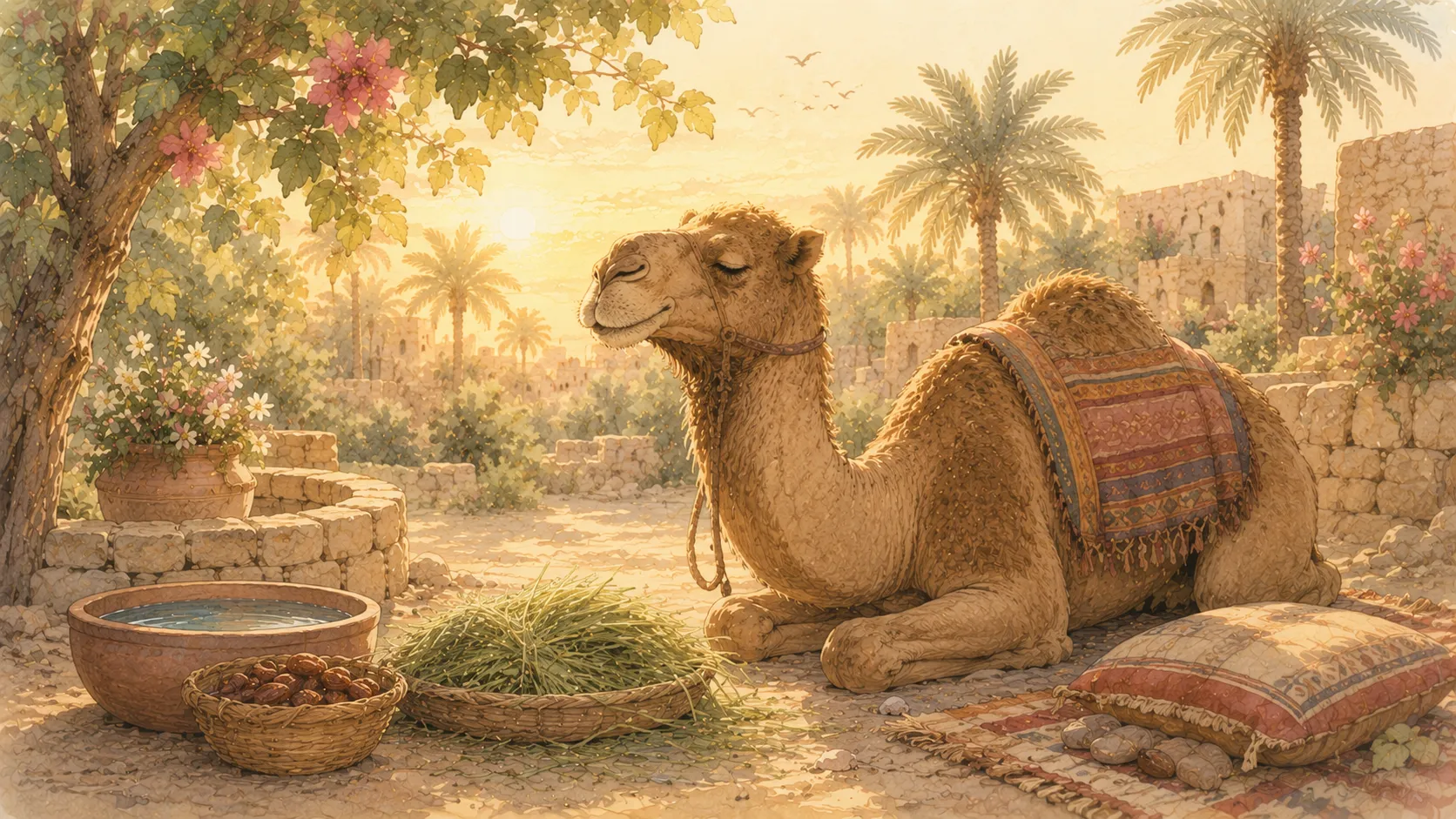
A camel in a garden lowering its head to the Prophet Muhammad with tears in its eyes, illustrating the hadith about the trust of caring for animals we own
Listen
0:00

One day, the Prophet Muhammad ﷺ entered a garden that belonged to a man from Madinah.

In the garden, he saw a camel. As soon as the camel saw the Prophet ﷺ, it did something unusual: it walked over to him, lowered its long neck, and made a soft, sad sound. Tears were in its eyes.

The Prophet ﷺ gently patted the camel's head, calming it. Then he turned to the people nearby and asked, "Who owns this camel?"

A young man came forward and said it was his.

The Prophet ﷺ looked at him and said, "This camel has complained to me that you make it work too hard and do not give it enough food. Do you not fear Allah about this animal which Allah has placed in your care?"

The young man understood. He felt ashamed, and he promised to take better care of his camel from that day on.

The Prophet ﷺ taught his companions that animals in our care are a trust from Allah, and we are responsible for their wellbeing.

What this story teaches us

When we have animals in our care, we are responsible for their food, their rest, and their happiness. Allah gave them to us as a trust. Taking care of an animal well is one of the ways we show Allah that we are grateful for what He has given us.

From a hadith narrated by Abdullah ibn Ja‘far (may Allah be pleased with him), recorded in Sunan Abu Dawud and Musnad Ahmad.

Try it today

If you have a pet, take a moment today to really pay attention to how you care for them. Do they have enough water? Are they being fed on time? Do they get enough play and rest? Sometimes the kindest thing is just to notice.

Read more lessons

For Parents

Source, context, and how to share this story with your child.

What is the hadith of the crying camel?

The hadith of the crying camel is a beautiful teaching of the Prophet Muhammad ﷺ about the responsibility of caring for animals we own. The Prophet entered a garden in Madinah and saw a camel that walked up to him, lowered its long neck, and made a sad sound with tears in its eyes. The Prophet gently patted the camel and asked who owned it. When a young man came forward, the Prophet said the camel had complained that its owner overworked it and underfed it. He asked the young man, "Do you not fear Allah about this animal which Allah has placed in your care?" The young man was ashamed and promised to do better. The story is one of the clearest teachings in Islam that animals in our care are a trust from Allah.

What does Islam say about caring for pets and working animals?

Islam teaches that animals in our care, whether pets, working animals, or livestock, are an amanah (trust) from Allah. We are responsible for their food, water, shelter, rest, and gentle treatment. The Prophet Muhammad ﷺ explicitly forbade overworking animals, branding them on the face, beating them, or keeping them without enough food and water. He also taught that paradise can be entered through a single act of kindness to an animal, and that a person can earn punishment for cruelty even to a creature as small as a cat. For Muslim families with pets, this means daily care, regular feeding and watering, vet attention when needed, and never treating the animal as a possession to be neglected.

Where is the hadith of the crying camel recorded?

The hadith is recorded in two major Sunni hadith collections: Sunan Abu Dawud, one of the six canonical collections compiled by Imam Abu Dawud as-Sijistani in the 9th century CE, and Musnad Ahmad, the massive collection compiled by Imam Ahmad ibn Hanbal. The narration in this lesson comes through Abdullah ibn Ja‘far ibn Abi Talib (may Allah be pleased with him), a nephew of Imam Ali and one of the companions who knew the Prophet Muhammad ﷺ from childhood. The hadith is cited widely in classical works on Islamic ethics, animal welfare, and the Prophet's gentle methods of teaching.

What is the source of this hadith?

The story is taken from a hadith narrated by Abdullah ibn Ja‘far (may Allah be pleased with him) and recorded in Sunan Abu Dawud and Musnad Ahmad. Hadith collections preserve the sayings and actions of the Prophet Muhammad ﷺ through chains of trusted narrators across generations. Sunan Abu Dawud is one of the six major hadith collections of Sunni Islam, and Musnad Ahmad is the largest single hadith collection by a single compiler. The story has been retold for centuries as a teaching about the trust of owning and caring for animals.

Can animals really feel sad or complain?

The Quran and hadith both affirm that animals have feelings, communities, and forms of awareness we do not fully understand. The Quran says that every creature glorifies Allah in its own way, even if we do not perceive how. This hadith is one of several where the Prophet Muhammad ﷺ recognized animal feelings directly, noticing distress and treating it as a real communication. Modern science has also confirmed that many animals, especially long-lived working animals like camels, horses, dogs, and elephants, show clear signs of emotional distress when they are mistreated or separated from those they care about. For a Muslim child, the takeaway is simple: animals feel things, and Allah is watching how we treat them.

How can I use this story with my child?

This story is wonderful for children who have a pet, an animal they care for, or even just chores related to a family pet. After reading, you might ask: "How do you think the camel felt before the Prophet came to help?" or "What do you think the young man changed about how he treated his camel?" The story is a gentle way to introduce the idea that pets are not toys, they are living beings entrusted to us by Allah. If your child sometimes forgets to feed the family pet, refill its water, or play gently with it, this story offers a soft, Islamic framing for those reminders. The lesson is clear: Allah notices how we treat the animals He gave us.