← Back to Lessons
Stories of the Prophets Before Muhammad ﷺ · Part 3 of 4

Yusuf the Leader

After years of patience, Yusuf is freed, vindicated, and given charge of all of Egypt's food. Part 3 of 4.

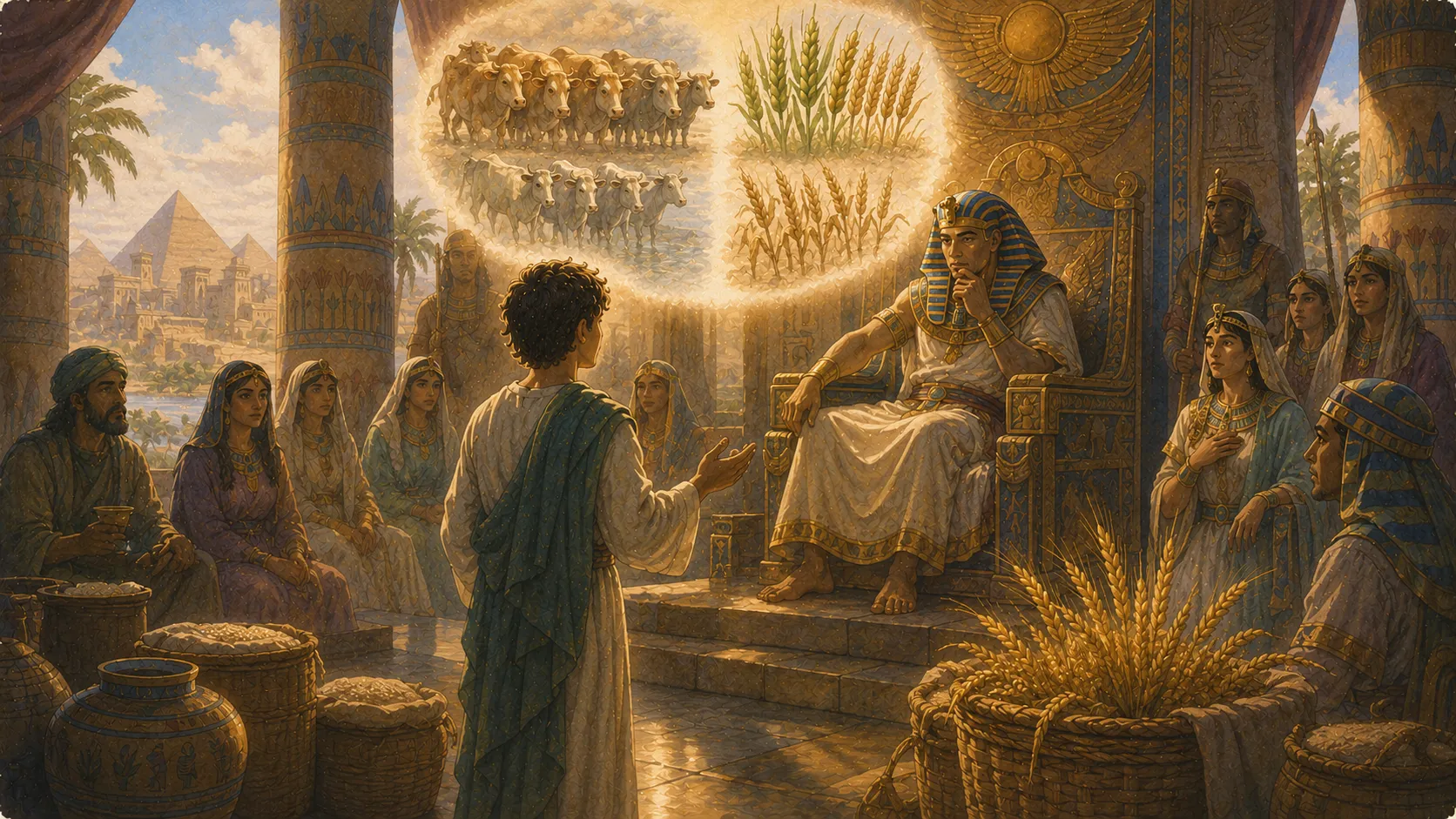
Prophet Yusuf standing before the king of Egypt, illustrating the Quranic story of Surah Yusuf Part 3 from the Quran
Listen
0:00

Years had passed. Yusuf was still in prison.

Far away in the great palace of Egypt, the king woke up one morning troubled by a dream. In his dream, he had seen seven fat cows. Then seven thin cows had come and eaten the fat ones whole. He had seen seven green ears of grain. Then seven dry ears had grown beside them.

The king called for his wisest advisors. He told them his dream and asked what it meant. They looked at each other. They scratched their heads. But none of them knew.

Then the cupbearer remembered. The man who had been set free years ago had forgotten his promise to Yusuf until now. He hurried to the king and said, "There is a man in prison who can explain this. His name is Yusuf."

The king sent for Yusuf at once.

But Yusuf did not come. Not yet. The king's messenger went to the prison, and Yusuf told him, "I am not ready to leave this place. First, I need my name to be cleared. I need everyone to know the truth."

The messenger gave the king the message. How interesting, thought the king. A man in prison turned down freedom but is asking for the truth instead?

So the king called upon all the women of al-Aziz's house, including his wife. One by one, they were asked: what had happened years ago with the young servant named Yusuf?

There was a long silence. Then, quietly, the women began to speak. They said Yusuf had done nothing wrong. They said they knew no evil of him at all.

Finally, the wife of al-Aziz herself said it out loud, in front of everyone: "It was I who lied. Yusuf is truthful. He is innocent."

After all those years, the truth was finally spoken. Yusuf's name was clean.

Now, with his head held high, Yusuf came before the king.

He listened to the king's dream, then spoke. "For seven years, your land will have plenty of food. The harvests will be huge, and your storehouses will fill. But after those seven years, seven hard years will come. The rain will stop, the crops will fail, and the people will grow hungry."

The king sat back. This was no ordinary man.

Then Yusuf said something brave. He said, "Place me in charge of the storehouses of Egypt. I will save food during the good years, so the people will eat during the hard years."

The king agreed without hesitation. Yusuf, who had been a slave, then a prisoner, was now placed in charge of all of Egypt's food.

The seven good years came, just as Yusuf had said. The fields grew tall, and Yusuf saved the extra food carefully.

Then the seven hard years began. The crops failed. Hungry people from many lands traveled to Egypt, the only place that still had food.

And far away in Canaan, Yusuf's old father was growing weak, and his ten brothers were growing hungry.

What this part teaches us

Yusuf had been patient for many years. He had been a slave, then a prisoner, then forgotten by the man he helped. But Allah was never going to forget him. When the right moment came, Yusuf's name was cleared, his gifts were recognized, and he was given the responsibility to help save many people. When we trust Allah and we are patient, Allah always sees us, even when no one else does. Read more stories.

From the Quran: Surah Yusuf (chapter 12). Part 3 covers verses 43 to 57, which tell of the king's dream, Yusuf interpreting it, his name being cleared, and his rise to lead Egypt's storehouses.

More to explore

When you're ready, continue to Part 4 of Yusuf's story (the finale). Or explore other beautiful stories of the prophets who came before Muhammad ﷺ.

Read more lessons

For Parents

Common questions about Yusuf the Leader and how to share this story with your child.

How did Yusuf become the leader of Egypt?

Yusuf became the leader of Egypt's food supplies after he correctly interpreted a strange dream the king of Egypt had been having. The king had dreamed of seven fat cows eaten by seven thin cows, and seven green ears of grain growing beside seven dry ones. None of his advisors could explain the dream. Then the cupbearer (who had been in prison with Yusuf) finally remembered him.

Yusuf explained that the dream meant seven years of plenty would come, followed by seven years of famine. He then made a brave proposal: place him in charge of Egypt's storehouses, so he could save food during the good years and feed the people during the hard years. The king agreed without hesitation. This is all described in Surah Yusuf, verses 43 to 57.

Why did Yusuf refuse to leave prison right away?

When the king sent for Yusuf, Yusuf did not come straight to the palace. He had been waiting many years for justice, and he wanted his name cleared first. He sent word back asking that the truth about what had happened in al-Aziz's house finally be told publicly. This is in Surah Yusuf verse 50.

This is one of the most powerful moments in the surah. Yusuf could have walked free immediately. But he wanted everyone to know he had been wrongly accused. This shows incredible patience and integrity. He waited for justice, not just for personal release. The king called the women of al-Aziz's house, and they admitted the truth. Yusuf's name was finally cleared.

What did the king's dream mean in Surah Yusuf?

The king's dream was a vision of what was coming to Egypt. The seven fat cows and seven green ears of grain represented seven coming years of plenty, with bountiful harvests and full storehouses. The seven thin cows that ate the fat ones, and the seven dry ears that grew beside the green ones, represented seven years of famine that would follow, swallowing up the good years.

Yusuf not only interpreted the dream but offered a practical solution: save food during the seven good years so the people would not starve during the seven hard years. This wisdom is described in Surah Yusuf verses 47 to 49. The story shows that Allah gave Yusuf both the ability to interpret dreams AND the wisdom to act on them.

Is the story of Yusuf the Leader authentic from the Quran?

Yes. This portion of Yusuf's story comes directly from the Quran, specifically from Surah Yusuf (chapter 12), verses 43 to 57. The Quran tells this part of the story in detail, including the king's dream, the cupbearer remembering Yusuf, Yusuf insisting on clearing his name, the women admitting the truth, and Yusuf being placed in charge of Egypt's storehouses.

Classical Islamic commentators including Ibn Kathir and al-Tabari have written extensively on these verses. Our retelling stays faithful to the events described, simplified for young readers. The Quranic text is the only authentic source for these specific details.

What does this part of the story teach kids?

This part of the trilogy is the great vindication. After Parts 1 and 2 (the betrayal, the well, the false accusation, the prison years), Part 3 finally brings justice. Yusuf's name is cleared, his gifts are recognized, and he is given real responsibility. The story teaches kids that Allah's timing is perfect, even when it feels slow.

It also teaches that asking for responsibility when you have the skill to help is a virtue, not vanity. Yusuf did not ask to lead Egypt for power or wealth. He asked because he saw a coming crisis and knew he could help. That kind of leadership, motivated by service rather than ego, is exactly what Islam teaches our children to value.

How can I use this story with my child?

This part of the story is wonderful for kids who are waiting for something hard to be over. Yusuf had been waiting for years. He waited in prison, then waited again even when freedom was offered, until his name was cleared. The story shows that patience pays off, but it can take a long time.

After reading, you can ask your child: "Have you ever had to wait a long time for something important? How did it feel?" Or: "What do you think Yusuf was thinking during all those years in prison?" These questions help your child see patience as a real strength, not just a passive virtue.