← Back to Lessons
Stories of the Prophets Before Muhammad ﷺ · Part 4 of 4

The Reunion

The brothers find Yusuf again. Forgiveness, restored sight, and a dream fulfilled. Part 4 of 4 (final).

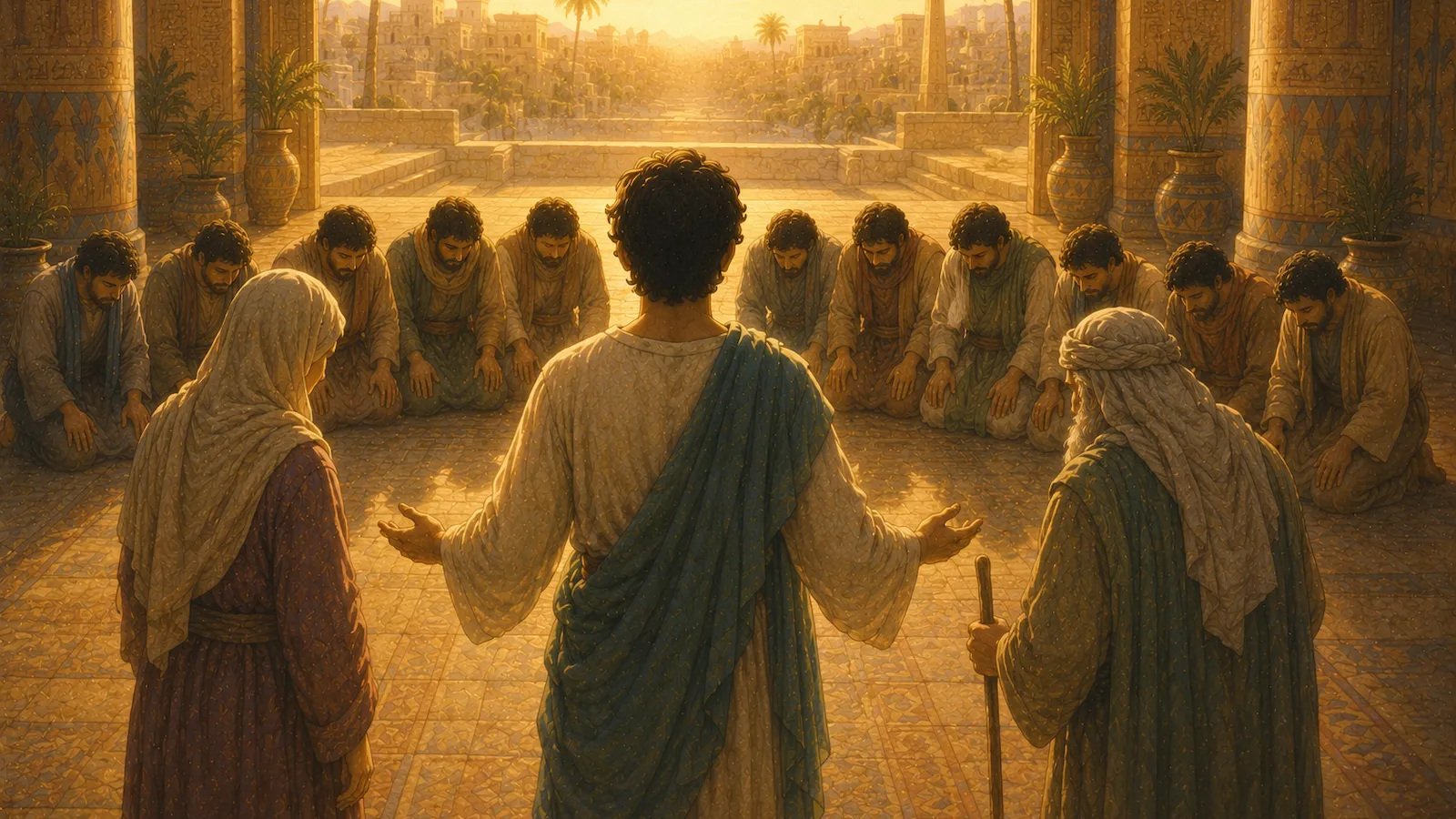
Prophet Yusuf reuniting with his family in Egypt, with eleven brothers, the sun and moon symbolic above, illustrating the Quranic story of Surah Yusuf Part 4 from the Quran
Listen
0:00

The famine grew worse, and food in Canaan was running low. So Yaqub sent his sons to Egypt to ask for help. All except Benyamin, his youngest, who stayed close to home.

The brothers crossed the desert and came to the storehouses of Egypt. They bowed before the man in charge. They asked for food. They did not look up. And they did not know that the man standing before them was the brother they had thrown into a well so many years ago.

Yusuf knew them at once. They had grown older, and they did not recognize him. He gave them food, but he asked them to bring back their youngest brother next time. He wanted to see Benyamin again.

The brothers went home. They begged their father, and Yaqub finally agreed to let Benyamin go.

When they returned to Egypt, Yusuf was overjoyed to see his little brother. He secretly placed the king's silver cup inside Benyamin's bag. When the brothers started home, the guards stopped them and found the cup. They said Benyamin must stay in Egypt as punishment.

The brothers were heartbroken. They begged the man in charge to take one of them instead. They could not bear to break their father's heart again. Yusuf watched them quietly. These were not the same brothers who had thrown him into a well. These were grown men with softer hearts.

Then Yusuf could wait no longer. He looked at them and said softly, "I am Yusuf. And this is my brother."

The brothers were stunned. They felt ashamed of what they had done so long ago. They asked Yusuf to forgive them.

Yusuf said, "No blame upon you today. May Allah forgive you. He is the most merciful of the merciful."

Then Yusuf took off his shirt and gave it to his brothers. He told them, "Take this to our father. Lay it over his face, and his sight will return."

The brothers hurried home. They placed Yusuf's shirt gently over their father's face. And in that moment, something miraculous happened. Yaqub's eyes opened. After all those years of crying, he could see again. He smiled and said, "I told you. I know things from Allah that you do not know."

The whole family traveled to Egypt. Yusuf ran out to meet them.

And then, one by one, they all bowed before Yusuf. His eleven brothers. His mother. His father. Eleven stars, and the sun, and the moon. Just like in the dream so long ago.

Yusuf raised his hands and thanked Allah for everything. After all those years, his family was together again.

What this story teaches us

Yusuf's life was full of hard moments. He was thrown in a well. He was sold. He was wrongly accused. He spent years in prison. And he was forgotten by people who should have remembered him. But Allah was with him through all of it. And when the right time came, everything turned out beautifully. His name was cleared. His family was together. His brothers were forgiven. And the dream he had as a small boy finally came true. When we trust Allah, our story always has a beautiful ending, even when we cannot see it yet. Read more stories.

🌟 You finished the story of Yusuf
Thank you for following Yusuf's journey through all four parts. His story is one of the most beloved in the Quran.
↺ Start again from Part 1

From the Quran: Surah Yusuf (chapter 12). Part 4 covers verses 58 to 101, which tell of the brothers arriving in Egypt, the cup test, Yusuf revealing himself, the shirt sent to Yaqub, the restored sight, the family reunion, and the dream fulfilled.

More to explore

Yusuf's story is complete. Revisit any part of his journey, or explore other beautiful stories of the prophets who came before Muhammad ﷺ.

Read more lessons

For Parents

Common questions about Yusuf's reunion with his family and how to share this finale with your child.

How did Yusuf forgive his brothers in the Quran?

Yusuf forgave his brothers with one of the most famous lines in the entire Quran. After revealing himself to them and seeing their shame, he said: "No blame will there be upon you today. May Allah forgive you, and He is the most merciful of the merciful." This is Surah Yusuf verse 92.

This moment is one of the great teachings of the Quran. Yusuf had been thrown in a well by these same brothers, sold into slavery, separated from his father for decades. He had every reason to be angry. But instead, he chose forgiveness. The line is so powerful that Muslims often quote it when they need to forgive someone in their own lives.

Why did Yusuf put the cup in Benyamin's bag?

Yusuf placed the king's silver cup in Benyamin's bag as a test. He wanted to see whether his brothers had truly changed since the day they had thrown him into a well. Would they betray Benyamin to save themselves, the way they had betrayed Yusuf years ago? Or would they protect their youngest brother?

The Quran tells us in Surah Yusuf verses 76 to 79 that this was a plan from Allah, given to Yusuf as wisdom. The brothers passed the test. They begged to take Benyamin's punishment themselves rather than lose him. They had grown into different people, and Yusuf saw the change in their hearts before revealing himself.

How did Yaqub's sight come back in the story of Yusuf?

Yaqub's sight returned through a miracle described in Surah Yusuf verse 96. When Yusuf revealed himself to his brothers, he gave them his shirt and told them to lay it over their father's face. The brothers hurried home with the shirt. When they placed it over Yaqub's face, his eyes opened, and he could see again after all those years of crying.

The Quran tells us that Yaqub had actually sensed Yusuf was alive long before the brothers brought the shirt. As they traveled home, he said: "I sense the scent of Yusuf, if only you would not call me senile." His patience and trust in Allah had been rewarded.

How does the dream from Part 1 come true in Part 4?

When Yusuf was a small boy in Part 1 of our story, he had a dream where eleven stars, along with the sun and the moon, bowed down to him. His father Yaqub immediately understood that this was a special dream from Allah, but the brothers later mocked the dream when they heard about it.

Many years later, in Part 4, the dream finally came true. When the whole family arrived in Egypt and stood before Yusuf, all of them bowed before him: his eleven brothers (the eleven stars), his mother (the moon), and his father (the sun). The Quran tells us in Surah Yusuf verse 100 that Yusuf himself recognized this moment as the fulfillment of his childhood dream.

Is the story of Yusuf's reunion authentic from the Quran?

Yes. This portion of Yusuf's story comes directly from the Quran, specifically from Surah Yusuf (chapter 12), verses 58 to 101, which is the longest section of the surah. The Quran tells the whole reunion in detail: the brothers' arrival, the cup test, the revelation, the forgiveness, the shirt sent to Yaqub, the restored sight, and the family bowing before Yusuf in fulfillment of his childhood dream.

Classical Islamic commentators including Ibn Kathir and al-Tabari have written extensively on these verses. Our retelling stays faithful to the events described, simplified for young readers but never changing the core narrative or its meaning.

How can I use this story with my child?

This is the trilogy's emotional payoff, and it teaches some of the most powerful lessons in Islam: forgiveness, trust in Allah's timing, and how families can heal after deep wounds. After reading, ask your child: "Have you ever forgiven someone who hurt you? How did it feel?" Or: "Yusuf could have been angry forever. Why do you think he chose to forgive his brothers instead?"

The story also models patience over a very long timeline. Yusuf waited many years for his dream to come true. Yaqub waited decades to see his son again. The trilogy teaches kids that Allah's plan is always unfolding, even when it feels slow. This is a profound lesson in a world that often pushes for quick results and instant gratification.