Learn
The six pillars of faith
Iman means faith. It rests on six beliefs that every Muslim holds in their heart and lives by. Here is what each one means.

-
1Belief in Allahtawheed · the oneness of Allahٱلْإِيمَانُ بِٱللَّٰه
The first and most important belief is that Allah is One. He has no partner, no children and no equal, and nothing in creation is like Him. He created everything that exists and He keeps all of it going, from the smallest seed to the stars.
Because Allah alone is the Creator, He alone deserves to be worshipped. Muslims come to know Him through His beautiful names, such as Ar-Rahman (the Most Merciful) and Al-Khaliq (the Creator).
What this means for a Muslim
- Every prayer and every dua is directed to Allah alone.
- Nothing and no one is worshipped besides Him.
- A Muslim trusts Allah in good times and in hard ones.
-
2The angelsal-malaa'ikahٱلْمَلَائِكَة
Angels are beings created by Allah from light. We cannot normally see them, but they are real. They never disobey Allah, and each one does the work Allah has given it.
The best known is Jibril (Gabriel), peace be upon him, who brought Allah's revelation to the prophets, including the Quran to the Prophet Muhammad ﷺ.
What this means for a Muslim
- There is more to creation than what our eyes can see.
- Angels worship Allah and carry out His commands.
- The message of Islam reached people through Jibril.
-
3The booksal-kutubٱلْكُتُب
Allah sent guidance to people through books revealed to His messengers. Muslims believe in all of these books as they were first revealed by Allah.
The Quran names several of them: the Tawrah (Torah) given to Musa, the Zabur (Psalms) given to Dawud, and the Injil (Gospel) given to Isa, peace be upon them. The Quran, revealed to the Prophet Muhammad ﷺ, is the last of them, and Muslims believe it has been preserved exactly as it was revealed.
What this means for a Muslim
- Allah has always guided people through revelation.
- The Quran is the final book and a guide for all of life.
- Muslims read, recite and learn from the Quran.
-
4The prophetsar-rusulٱلرُّسُل
Allah sent prophets and messengers to people throughout history, to teach them to worship Him alone and to live good lives. Every prophet brought the same core message.
The Quran names 25 of them, including Adam, Nuh (Noah), Ibrahim (Abraham), Musa (Moses) and Isa (Jesus), peace be upon them. The last prophet is Muhammad ﷺ, and there is no prophet after him. Muslims believe in and respect all of them.
What this means for a Muslim
- Every prophet taught the worship of Allah alone.
- Muslims love and honour all the prophets.
- The Prophet Muhammad ﷺ is followed as the best example.
-
5The Last Dayal-yawm al-aakhirٱلْيَوْمُ ٱلْآخِر
This life will one day come to an end. On the Last Day, everyone who ever lived will be brought back to life and will stand before Allah, who will judge each person fairly for what they did.
Allah is Most Just and Most Merciful. Those who believed and did good will be rewarded with Paradise (Jannah), a place of peace and happiness.
What this means for a Muslim
- Every good deed matters, even a small one.
- This life is a time to do good and to turn back to Allah.
- A Muslim hopes in Allah's mercy and tries to be fair to others.
-
6Allah's decreeal-qadarٱلْقَدَر
Allah knows everything: what has happened, what is happening, and what will happen. Nothing takes place in the universe without His knowledge and His will.
This does not mean people have no choice. Each person still chooses their own actions and is responsible for them. Believing in qadar helps a Muslim stay patient when something is hard and grateful when something is good.
What this means for a Muslim
- A Muslim does their best, then trusts Allah with the outcome.
- Hard times are met with patience, good times with thanks.
- We are still responsible for the choices we make.
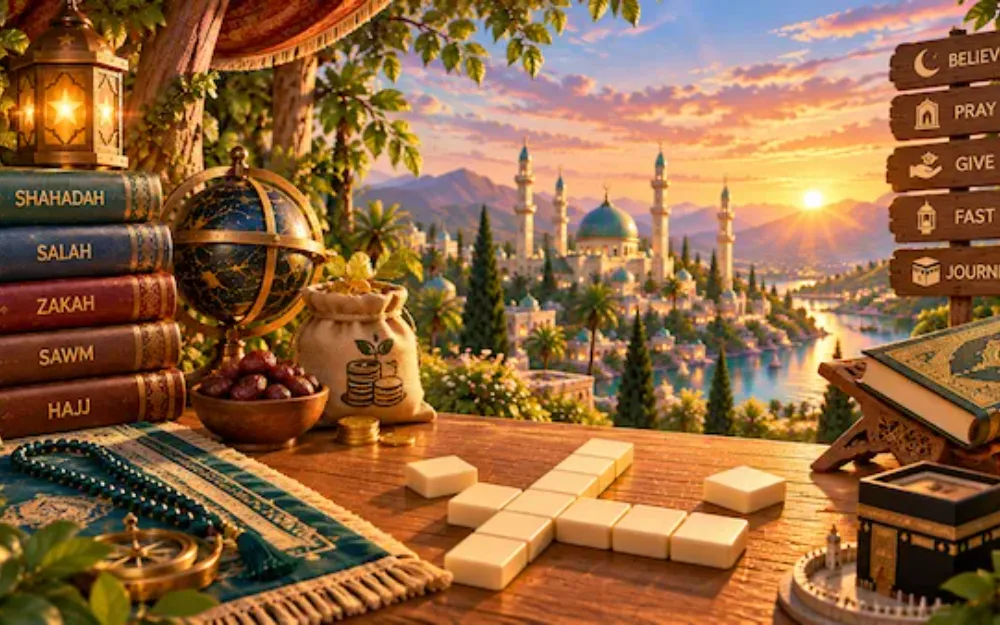 The five pillars of IslamThe six pillars of faith are what a Muslim believes. The five pillars of Islam are what a Muslim does.