Learn
The five pillars of Islam
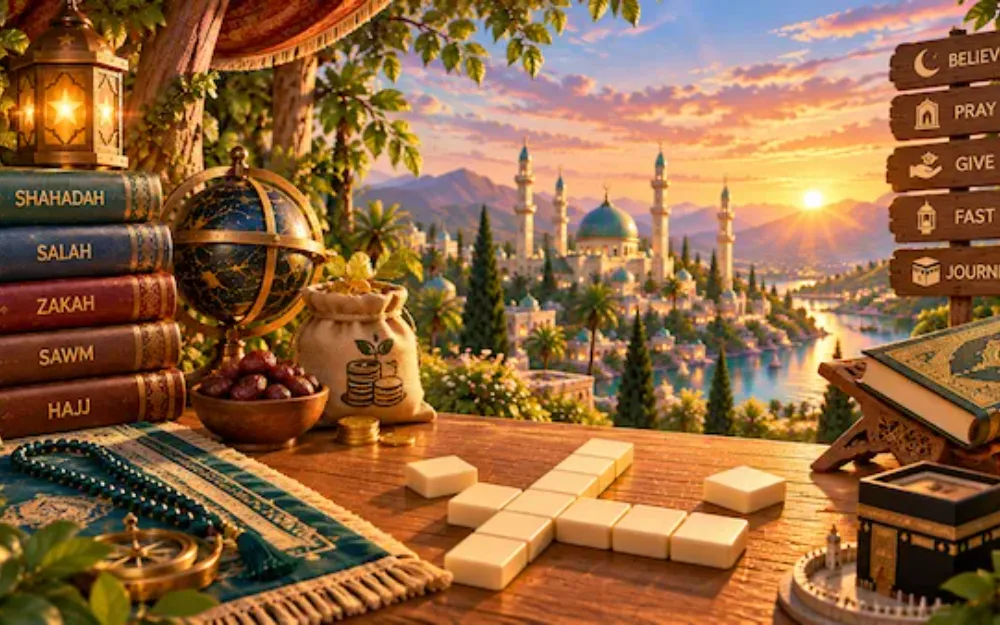
Islam is built on five pillars: the acts of worship that shape a Muslim's life, from a single sentence of faith to a journey made once in a lifetime. Here is what each one means.
-
1Shahadasha-HAA-dah · the declaration of faithٱلشَّهَادَة
The shahada is the heart of Islam: bearing witness that there is no god but Allah, and that Muhammad ﷺ is His Messenger. Saying it sincerely, and believing it, is how a person becomes Muslim.
It has two parts. The first means worshipping Allah alone. The second means accepting the Prophet Muhammad ﷺ as Allah's final messenger, and following his example in how to worship and how to live.
In a Muslim's life
- It is the first step for anyone becoming Muslim.
- Its words are repeated in every prayer.
- Every other pillar is built on it.
-
2SalahSA-lah · prayerٱلصَّلَاة
Muslims pray five times every day, at set times: Fajr before sunrise, Dhuhr at midday, Asr in the afternoon, Maghrib just after sunset, and Isha at night. Before praying, a Muslim makes wudu, the washing that prepares them for prayer.
Every prayer is made up of units called rakat, with standing, bowing and prostrating. Muslims all over the world face the same direction when they pray, towards the Kaaba in Mecca, and recite Al-Fatiha in every unit.
In a Muslim's life
- Prayer gives the day a rhythm, from dawn to night.
- It is a direct, personal connection with Allah.
- It can be prayed alone, or together at a masjid.
-
3Zakatza-KAAT · giving to those in needٱلزَّكَاة
Zakat means purification and growth. Each year, Muslims whose savings are above a set minimum give a share of that wealth to people in need. It is not a gift a person chooses to give; it is a duty, and it belongs to those who receive it.
Zakat is different from sadaqah, which is any charity given freely, at any time, in any amount. Both are encouraged, but zakat is the pillar.
In a Muslim's life
- It reminds a Muslim that wealth is a trust from Allah.
- It helps the poor and brings a community closer.
- How much is due depends on each person's circumstances; an imam can explain.
-
4SawmSAWM · fasting in Ramadanٱلصَّوْم
During Ramadan, the ninth month of the Islamic calendar, Muslims fast from dawn until sunset. That means no food or drink during daylight hours, along with extra effort to be patient, kind and prayerful.
Many families eat a meal before dawn, called suhoor, and break the fast together at sunset, called iftar. Ramadan ends with the celebration of Eid al-Fitr. People who are ill, travelling or otherwise unable to fast have other ways to make it up.
In a Muslim's life
- Fasting builds patience, self-control and gratitude.
- It helps a Muslim feel for those who go hungry.
- Ramadan is also a month of extra prayer and Quran.
-
5HajjHAJJ · the pilgrimage to Meccaٱلْحَجّ
Hajj is the pilgrimage to Mecca, made once in a lifetime by every Muslim who is physically and financially able. It takes place each year in the month of Dhul Hijjah, and millions of Muslims from every country join it.
Pilgrims wear simple white clothing, called ihram, so that everyone stands equal before Allah. Together they walk around the Kaaba and follow in the footsteps of the Prophet Ibrahim, peace be upon him, and his family. Hajj is followed by the celebration of Eid al-Adha.
In a Muslim's life
- It is often the journey of a lifetime, saved and prepared for.
- It shows the whole Muslim world gathered as one.
- Muslims who are not able to go are not required to.
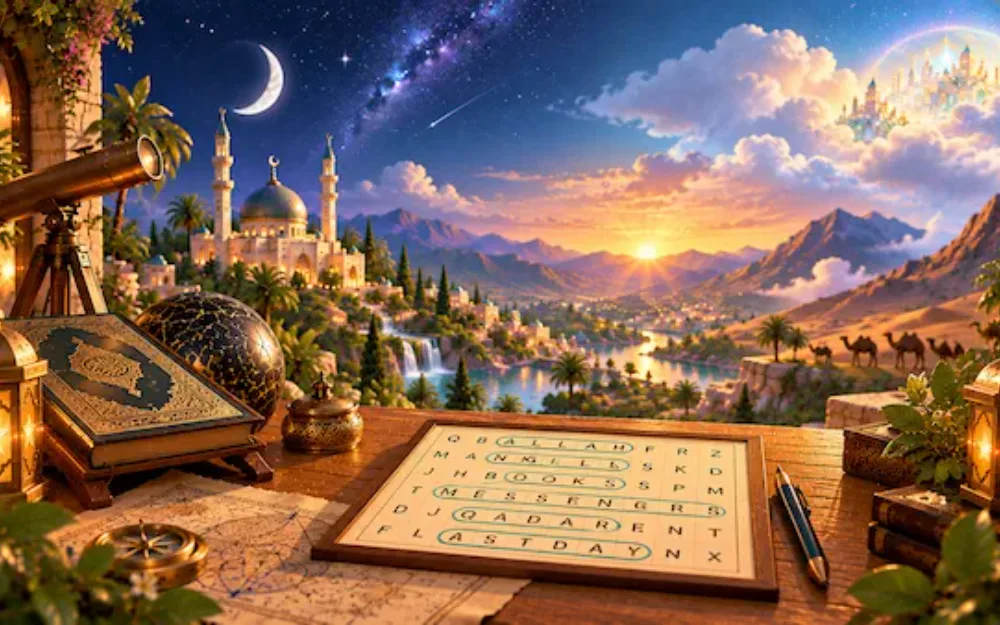 The six pillars of faithThe five pillars are what a Muslim does. The six pillars of faith are what a Muslim believes.