الانشقاق
Al-Inshiqaq
The sky splits open and listens to its Lord. And a quiet line in the middle says something every child can hold: whatever you are doing, you are on your way to meeting Allah.
▶ Listen fullListen, read, and learn
In the name of Allah, the Most Gracious, the Most Merciful.
When the sky splits open,
and listens to its Lord, as it rightly should,
and when the earth is stretched out flat,
and throws out what is inside it and empties itself,
and listens to its Lord, as it rightly should —
O human being, you are working hard toward your Lord, and you are going to meet Him.
As for the one handed their record in their right hand,
they will have an easy reckoning
and go back to their family happy.
But the one handed their record from behind their back
will cry out for ruin,
and will enter a blaze.
They had been happy among their family,
thinking they would never return to Allah.
But yes — their Lord was always watching them.
I swear by the red glow of sunset,
and by the night and all it gathers in,
and by the moon when it becomes full —
you will move from one stage to another.
So what is wrong with them, that they do not believe?
And when the Quran is recited to them, they do not bow down.
Instead, those who refuse to believe call it a lie,
and Allah knows best what they are keeping inside.
So give them news of a painful punishment —
except those who believe and do good; for them is a reward that never runs out.
Verse meanings adapted for young readers · full translation at Quran.com
What this symbol means
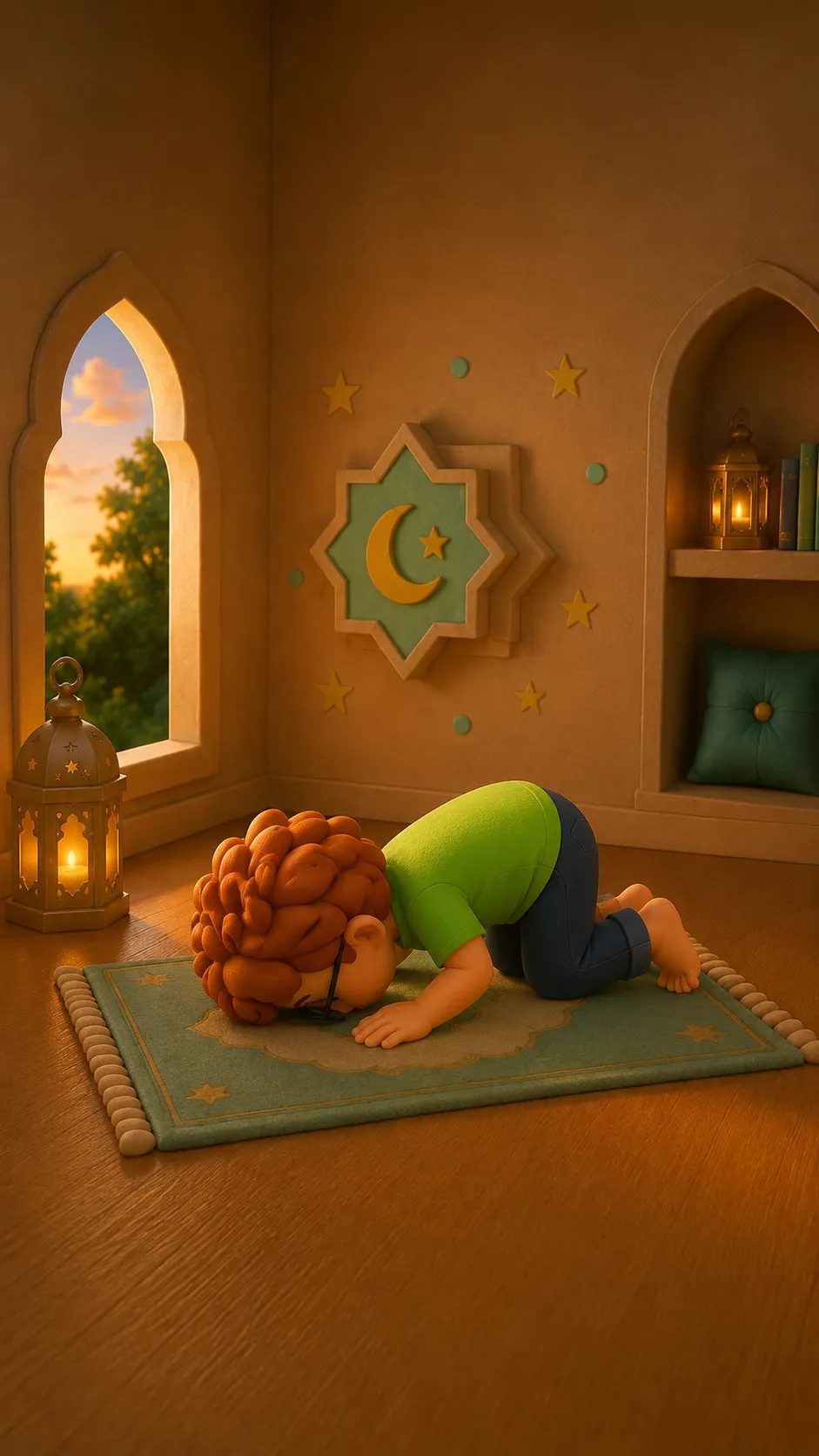
Verse 21 of Al-Inshiqaq is a verse of prostration. When a Muslim reads or hears it, they make one sajdah — the same position as in prayer, forehead on the ground. It is called sajdat at-tilawah, the prostration of recitation. You will see the mark at this spot in a printed Quran too.
It is simple: go down into sujood, say the words below once, and come back up. There is no takbir needed to begin, no tashahhud, and no salam at the end — it is a single prostration, not a prayer.
سُبْحَانَ رَبِّيَ الْأَعْلَى Subhana Rabbiyal-A'la Glory to my Lord, the Most HighYour child may already know those words — they are what we say in every sujood, and they open Surah Al-A'la. The other verse of prostration on this site is at the end of Surah Al-Alaq. If they are somewhere they cannot prostrate right now, that is fine: many scholars hold this sajdah is recommended rather than required, so it can be done later.
About Al-Inshiqaq
Al-Inshiqaq means “the splitting open.” It begins with the sky tearing apart and the earth being stretched flat and emptying out everything inside it. And both times, the surah adds the same strange, beautiful line: and it listened to its Lord, as it rightly should. The sky does not argue. The earth does not argue.
Then it turns to us, and this is the line worth teaching. “O human being, you are labouring toward your Lord — labouring hard — and you are going to meet Him.” The word is kadih: someone working, striving, tiring themselves out. Every single person is walking somewhere. The surah simply tells you where the road ends.
Then two pictures side by side. One person is handed their record in their right hand — an easy reckoning, and they go back to their family happy. Another is handed it from behind their back. The difference is not explained with a lecture; it is just shown.
The last part swears by the red glow after sunset, by the night and what it gathers in, and by the moon when it becomes full — and then says you will move from stage to stage. Life keeps changing you. The surah ends with the ones who believe and do good, who have a reward that never runs out.
Verse 19 says you will surely move from one stage to another. Scholars have read it as the stages of a life — child to adult to old age — and as the stages after death. For a child it works beautifully as the first: you are not the same as you were last year, and you will not be the same next year. The surah treats that as normal, and as heading somewhere.
Explore more short surahs →Surahs paired with Al-Inshiqaq
These short surahs teach lessons close to Al-Inshiqaq:
For Parents
What does Al-Inshiqaq mean?
Al-Inshiqaq (الانشقاق) means “the splitting open.” It is named after its first verse, which describes the sky splitting apart at the start of the Day of Judgement.
What is Surah Al-Inshiqaq about?
It opens with the sky splitting and the earth being flattened, both obeying their Lord. It then tells the human being that they are labouring toward a meeting with their Lord, and contrasts the person given their record in the right hand with the one given it behind their back. It swears by the twilight and the night, says people move from stage to stage, and ends with the believers who have a reward that never ends.
Does Surah Al-Inshiqaq have a verse of prostration?
Yes. Verse 21 mentions those who do not bow down when the Quran is recited to them, and it is a verse of sajdah. A Muslim who recites or hears it makes one prostration, the same as at the end of Surah Al-Alaq. The page marks the verse and explains what to do.
How long is Surah Al-Inshiqaq?
Al-Inshiqaq is twenty-five verses long and takes about a minute to recite. It is the 84th surah of the Quran and was revealed in Mecca. Its verses are short, and several rhyme on the same “-at” and “-ura” endings, which helps children pick it up.
What does “you are labouring toward your Lord” mean?
Verse 6 uses the word kadih — someone working hard, even wearing themselves out. The point is that everybody is heading somewhere whether they think about it or not, and the destination is a meeting with Allah. For a child it lands well as: whatever you are busy with today, you are on your way to Him.
How can my child memorize Al-Inshiqaq?
Split it in three: the sky and earth obeying (1–5), the two records (6–15), and the oaths with the closing (16–25). Verses 2 and 5 are word-for-word identical, which children notice quickly and enjoy. Most manage all twenty-five in about two weeks.