The ninth month of the Islamic year
Ramadan
The month of fasting, when Muslims try to be their best, from what they eat to what they say. Here is what Ramadan is, in simple words.
What Ramadan is
- During Ramadan, the ninth month of the Islamic calendar, Muslims fast from dawn until sunset.
- Fasting in Ramadan, called sawm, is one of the five pillars of Islam.
- The Quran was first revealed in Ramadan.
- Allah tells us in the Quran that fasting was given to us so that we may become more mindful of Him.
More than food and water
- Fasting is not only about food and water. When we fast, we also try to keep our words, our hands and our hearts good.
- A fasting person tries not to lie, not to say unkind things or gossip, not to take what is not theirs, and not to lose their temper.
- If someone is unkind to a person who is fasting, the Prophet Muhammad ﷺ taught them to answer calmly, "I am fasting."
- So Ramadan is a month of practice: learning to say no to what we want right now, so that we can choose what is good.
A fresh start for everyone
- Ramadan is a new beginning for everyone, whatever they have done before. It is a time to say sorry to Allah, to make things right with people, and to change.
- The Prophet Muhammad ﷺ said that whoever fasts Ramadan with faith, hoping for Allah’s reward, will have their past sins forgiven.
For parents, converts and reverts Tap to open
- The Prophet ﷺ taught that if a person does not give up lying and wrong actions, Allah has no need for them to give up their food and drink.
- From dawn until sunset, adults who are fasting keep from eating, drinking and marital intimacy. After sunset, all of these are allowed again until dawn.
- People who are ill, travelling or otherwise unable to fast have other ways to make it up.
- Women do not fast during their monthly period or while recovering after childbirth, and make up the days later.
- Children are not required to fast. Many practise as they grow, with shorter fasts, such as until lunchtime.
Suhoor and iftar
- Many families eat a meal before dawn, called suhoor, and break the fast together at sunset, called iftar.
- The Prophet Muhammad ﷺ encouraged eating suhoor, and said there is blessing in it.
- Many Muslims break their fast with dates and water, as the Prophet ﷺ did.
- The dua for breaking the fast: "Allahumma laka sumtu, wa ala rizqika aftartu", O Allah, for You I fasted, and with Your provision I break my fast.
The nights of Ramadan
- Ramadan is also a month of extra prayer and Quran.
- Many Muslims pray extra prayers at night in Ramadan, called taraweeh.
- Laylat al-Qadr, the holiest night of the year, is one of its last ten nights.
- On this one night, Allah began to reveal the Quran, and worship done on it is better than a thousand months.
Giving
- Ramadan is a month of giving. Many Muslims give extra charity, called sadaqah.
- Before the Eid prayer, families give zakat al-fitr for each person in the family: a small gift of food, or its value, for people in need, so that everyone can enjoy Eid.
Eid al-Fitr
- Ramadan ends with the celebration of Eid al-Fitr.
- Eid al-Fitr is on the first day of Shawwal.
More for Ramadan
 The five pillars of IslamFasting in Ramadan is the fourth pillar.
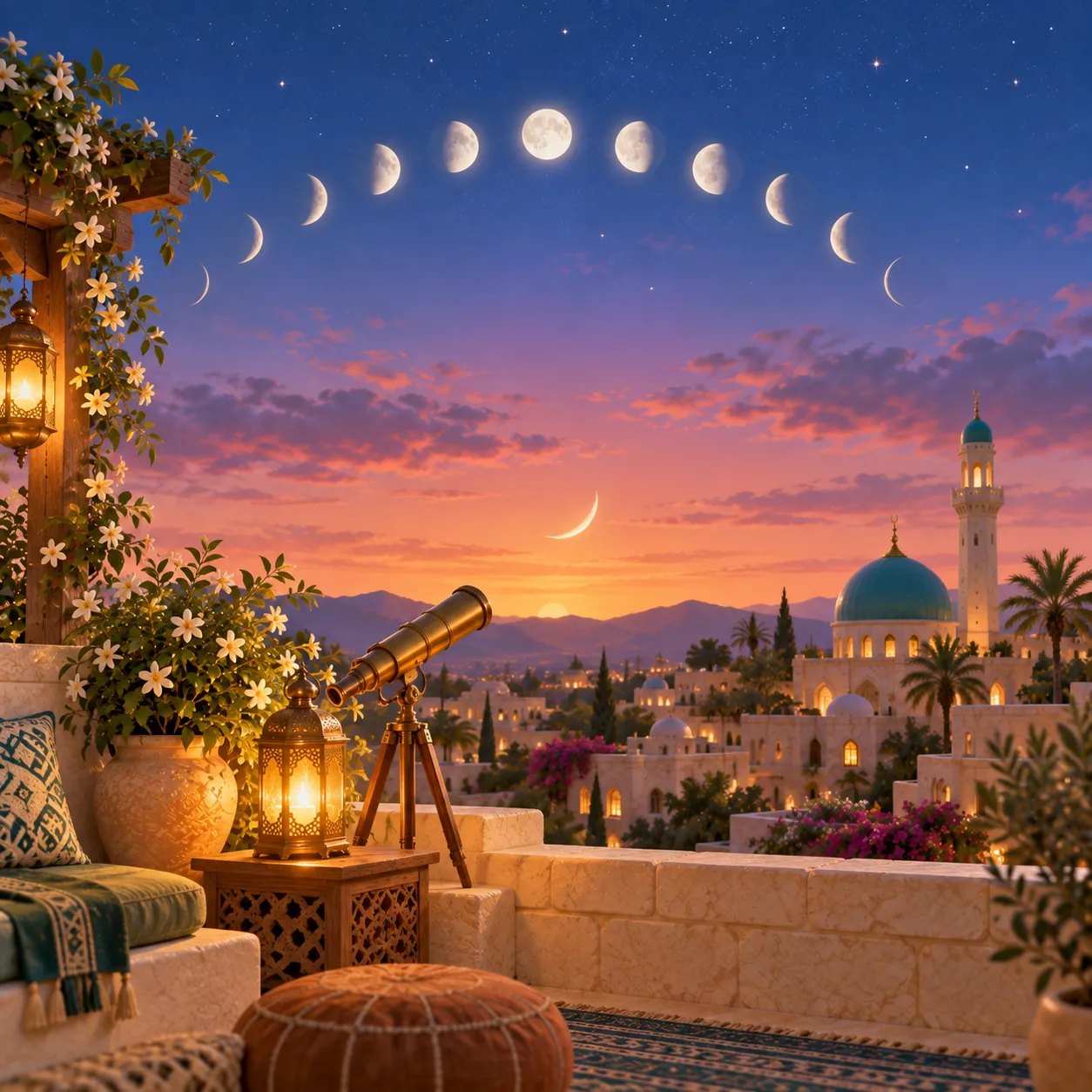 The Islamic monthsWhere Ramadan sits in the year.
 Surah Al-QadrThe surah about the Night of Power.
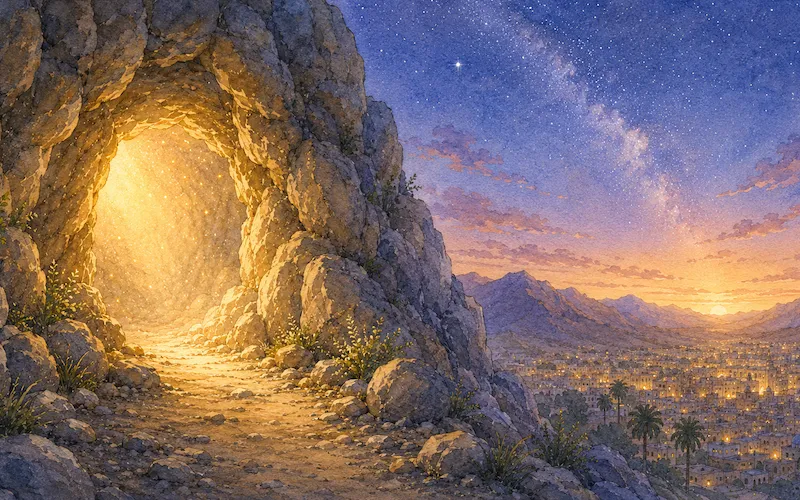 The First Revelation in HiraThe night the Quran began.
 The Eid TakbirWhat we say on the way to the Eid prayer.
 Eid MubarakA song for Eid morning.
Common questions
Is fasting only about food and water?
No. When Muslims fast, they also try to keep their words, their hands and their hearts good: no lying, gossip, unkindness or taking what is not theirs.
Do children fast in Ramadan?
Children are not required to fast. Many practise as they grow, with shorter fasts, such as until lunchtime.
What are suhoor and iftar?
Suhoor is the meal before dawn, and iftar is the meal at sunset that breaks the fast.
When does Ramadan start?
Ramadan begins when the new crescent moon is seen at the end of Shaban. The Islamic year is a lunar year, so Ramadan comes about 11 days earlier each year.